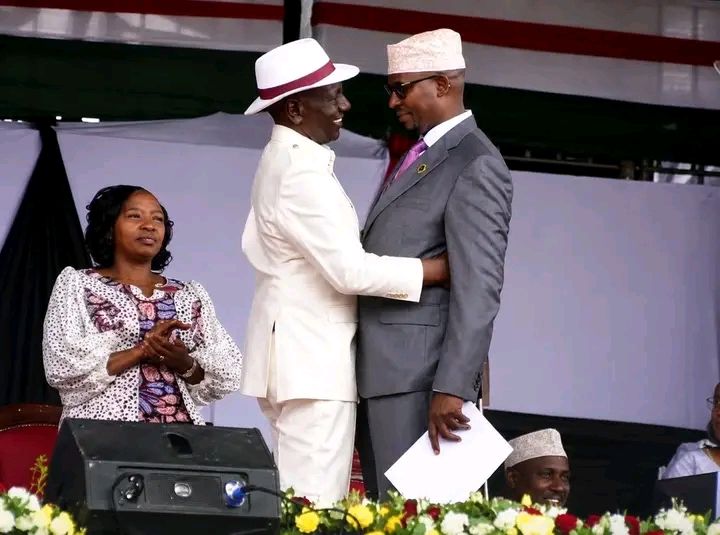
Kenyans on X (KoX) have torn into President William Ruto after he apologised to Northern Kenya for decades of marginalisation.
KoX argued that the narrative is increasingly colliding with a stubborn question: if billions have been flowing into the region for over a decade, where are the results?
Speaking in Wajir during Madaraka Day celebrations, Ruto sought forgiveness on behalf of the Kenyan state for years of neglect, exclusion and underdevelopment.
He later posted a message to that effect on his X page.
But instead of applause, he walked into a digital sandstorm.
“What marginalisation?” became the rallying cry.
Hundreds of users pushed back, insisting the national conversation should move from historical injustice to accountability.
The criticism touches a sensitive truth. For decades, Northern Kenya was the face of state neglect.
Vast stretches of land were defined by cracked earth, endless dust and villages where water, healthcare and schools often felt like distant promises.
Roads snaked across the landscape like forgotten scars.
Devolved Funds
Then came devolution.
Since 2013, billions of shillings have poured into county governments through equitable share allocations, conditional grants and the Equalisation Fund.
Revenue-sharing formulas were deliberately crafted to favour historically disadvantaged regions by factoring in poverty, geographical size and development gaps.
In the 2025/26 financial year alone, Mandera received KSh12.27 billion, Turkana about KSh11.8 billion, Garissa KSh 8.88 billion, Marsabit KSh 8.11 billion, and Isiolo KSh5.63 billion in equitable share allocations.
On behalf of the Government and the Republic of Kenya, I extend my sincere apology to the people of Northern Kenya for the hardships and exclusion you have endured over the years.
Your resilience in the face of these challenges is a testament to the strength and patriotism of… pic.twitter.com/pXW46Tqjba
— William Samoei Ruto, PhD (@WilliamsRuto) June 1, 2026
Wajir’s allocation stands at roughly KSh8.7 billion in its approved county budget.
Nationally, counties shared KSh 415 billion in 2025/26, with the figure rising to KSh 420 billion in 2026/27.
That is where many critics say the marginalisation argument begins to unravel.
“If these counties are still struggling, where did the money go?” one commenter asked.
Others alleged that while public funds have flooded county coffers, development has often arrived as a trickle.
Hospitals remain understaffed, water shortages persist and infrastructure gaps continue to haunt many communities.
READ ALSO: How Somali-Linked Fraud Ring Looted Billions from Minnesota’s Autism, Welfare Funds
Former Deputy President Rigathi Gachagua has repeatedly argued that northern counties have collectively received hundreds of billions since devolution, yet many residents still live amid the same hardships that politicians routinely cite during campaign seasons.
PAY ATTENTION: Reach us at info@gotta.news