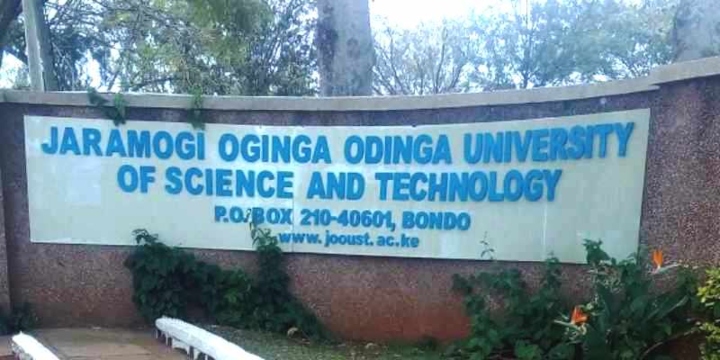
A Human Resource manager earning KSh610,000 every month has lost his court battle against Jaramogi Oginga Odinga University of Science and Technology (JOOUST) after a judge ruled that the institution lawfully dismissed him over negligence and gross misconduct.
The court found that the university not only had valid reasons to sack Andrew Kiplagat Barno but also gave him a fair chance to defend himself before terminating his employment.
His bid to recover millions in compensation, including damages linked to bank loans and emotional distress, was dismissed, although the judge spared him from paying the university’s legal costs.
Dream Job
Barno joined JOOUST on June 3, 2021, as Human Resource and Training Manager for the USAID-funded Boresha Jamii Programme, one of western Kenya’s largest health projects supporting HIV care, maternal health, nutrition and county health systems.
His monthly salary started at KSh450,000 before rising to KSh610,000, reflecting the senior role he held within the donor-funded programme.
However, barely a year later, his promising career took a dramatic turn.
Barno told the Employment and Labour Relations Court that he received an email inviting him to a disciplinary hearing before eventually receiving a termination letter dated July 22, 2022.
He appealed the decision, but the university upheld his dismissal on August 15, 2022.
Insisting the dismissal was unlawful, he sued the university, claiming the disciplinary process was rushed and unfair.
He argued that he was never given adequate details of the accusations against him and was denied a meaningful opportunity to defend himself before losing his job.
Heavy Claims
Barno said the dismissal triggered devastating financial and personal consequences.
Without his salary, he told the court, he could no longer service a KSh4 million Barclays Bank loan.
He also claimed to have suffered embarrassment, emotional distress, and even the breakdown of his marriage.
He consequently sought more than KSh15 million in various remedies, including 12 months’ salary as compensation, notice pay, unpaid salary during suspension, accrued leave, damages for emotional suffering and reimbursement of his bank and SACCO loans.
The university strongly opposed the suit.
It argued that Barno had repeatedly breached recruitment procedures, failed to maintain proper staff records, issued appointment letters using unauthorised formats, sent appointment letters to the wrong employees and wrongly calculated leave days, exposing the institution to a financial loss of KSh137,573.
JOOUST maintained that those failures amounted to negligence, incompetence, and gross misconduct.
Judge’s Verdict
The university further told the court that Barno was informed of the allegations, suspended, supplied with a detailed charge sheet, and invited to a disciplinary hearing more than seven days later.
It also said he attended the hearing, defended himself, and later exercised his right of appeal after being dismissed.
Justice Nzioki wa Makau agreed.
The judge found that Barno never asked for additional time to prepare his defence, never requested further documents from the university and never complained that the accusations against him were vague.
Instead, the evidence showed he participated in the disciplinary process and later lodged an appeal, demonstrating that he had been accorded the protections required under Section 41 of the Employment Act.
“The claimant was heard, given a chance to offer a defence and upon his termination was offered a chance to appeal,” Justice Makau observed.
The court consequently held that the dismissal complied with both Sections 43 and 45 of the Employment Act, which require employers to prove a valid reason for termination while following a fair disciplinary process.
Final Blow
That finding effectively brought down every claim Barno had made.
The court rejected his requests for compensation, salary during suspension, notice pay, leave pay, damages for emotional distress and reimbursement of both his bank and SACCO loans.
Still, the university did not walk away with everything it wanted.
READ ALSO: Lavington Security Guards Lose Appeal as Court Upholds KSh840,740 Award to Sacked Guard
Although it successfully defended the suit, Justice Makau declined to award it legal costs.
The judge noted that Barno had already suffered financially after losing his employment and ruled that requiring him to pay the university’s legal expenses would only worsen his financial position.
Each party was therefore ordered to bear its own costs.
PAY ATTENTION: Reach us at info@gotta.news.