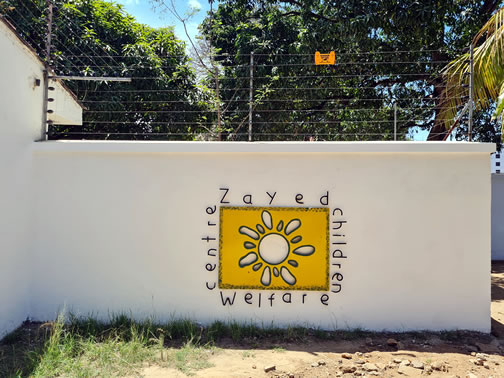
A Mombasa children’s welfare centre thought it had quietly closed the chapter on a teacher accused of absenteeism.
Instead, nearly five years later, its own paperwork became the evidence that unraveled its defence.
In a hard-hitting judgement, the Employment and Labour Relations Court found that Sheikh Zayed Children Welfare Centre ignored mandatory disciplinary procedures before dismissing long-time madrassa teacher Sharifa Kassim Ismael, turning what appeared to be a routine employment dispute into a costly legal lesson for employers across Kenya.
Although the court upheld the finding that her dismissal was unfair, it reduced her compensation from KSh473,600 to KSh164,000, saying the trial court failed to justify the original award.
Years Matter
The dispute dates back to January 11, 2022, when Ismael walked into the director’s office expecting to resume work after the school holidays.
Instead, she walked out carrying a termination letter.
The letter informed her that her contract had expired and would not be renewed because of “unwarranted absenteeism, among other reasons.” It also claimed to serve as one month’s notice.
Yet Justice Ocharo Kebira found those explanations collapsed under scrutiny.
The teacher had served the institution continuously since 2014 under successive fixed-term contracts.
Her final written contract expired on December 31, 2020. However, the school never issued another one.
Instead, it allowed her to continue teaching throughout 2021, paying her the same monthly salary of KSh34,000 and assigning the same responsibilities.
That decision proved decisive.
The judge ruled that by allowing Ismael to keep working after her contract expired, the employer effectively created a new month-to-month employment relationship protected by the Employment Act.
The school could therefore no longer rely on the argument that her contract had simply lapsed.
Paper Trail
The employer insisted Ismael deserved dismissal because she failed to report when classes reopened after travelling upcountry during the December 2021 holidays.
To support that claim, the school relied on a disciplinary committee report dated December 11, 2021.
However, the judge found the document raised more questions than it answered.
Unlike other teachers mentioned in the report, Ismael’s section contained no record showing she appeared before the committee or responded to allegations.
Instead, it simply reproduced accusations attributed to madrassa head Ustadh Suleiman Matata.
The court found that omission impossible to ignore.
Worse still, the disciplinary report had been prepared weeks before the alleged absenteeism relied upon in the dismissal letter even occurred.
Justice Kebira noted that the misconduct cited involved Ismael’s failure to report back on January 3, 2022, after travelling to visit her husband.
Yet the disciplinary report was completed on December 11, 2021.
“A disciplinary committee cannot… have heard, considered and made findings… about an absence that had not yet happened,” the judge observed, dismantling one of the employer’s central arguments.
The school’s case weakened even further during cross-examination.
Director Abubakar Hassan Dindia admitted no notice to show cause had been produced before court.
He also conceded Ismael never signed the disciplinary report.
More damagingly, Matata, whose allegations formed the backbone of the employer’s case, never testified despite being listed as a witness, leaving his account untested.
Letter Collapses
Justice Kebira reserved some of his strongest criticism for the dismissal letter itself.
He described it as internally contradictory.
On one hand, it claimed the employment contract had expired naturally. On another, it blamed absenteeism for ending the relationship.
Then, in the same breath, it purported to issue one month’s notice.
According to the judge, those were three entirely different legal routes for ending employment.
The contradictions did not end there.
Although the letter purported to give one month’s notice, it astonishingly stated that the notice would expire on the very day it was issued, January 11, 2022.
Dindia attempted to explain the error by calling it a typographical mistake. The court rejected that explanation because no corrected letter was ever produced.
“The letter cannot… simultaneously assert that a contract has expired of its own accord, that the employee’s misconduct is the reason it was not renewed, and that a full month’s contractual notice is being given,” Justice Kebira ruled.
Having reviewed the evidence afresh, the judge concluded the welfare centre never proved Ismael received a fair disciplinary hearing, a valid explanation of the accusations or the opportunity to defend herself before losing her job.
Costly Lesson
While upholding the finding of unfair dismissal, Justice Kebira faulted the magistrate’s assessment of damages.
The lower court had awarded KSh473,600 without explaining which claims succeeded or how the figure had been reached.
Calling for greater transparency in employment cases, the judge said courts should give reasons for every head of compensation rather than issuing unexplained global awards.
He then recalculated the entire claim.
Ismael received KSh34,000 as salary in lieu of notice after the employer failed to prove payment.
Her claim for KSh119,000 in service pay was rejected because she belonged to an ICEA Lion Provident Fund, from which she had already received more than KSh208,000 after leaving employment.
Membership in such a scheme bars recovery of statutory service pay.
READ ALSO: Court Deals Kensalt Major Blow, Rules Two-Year ‘Casual’ Worker Was Legally Permanent
The court further awarded KSh102,000 as compensation for unfair dismissal, equivalent to three months’ salary, and KSh28,000 as prorated leave allowance.
The total award therefore stood at KSh164,000, together with interest.
The school was also ordered to issue Ismael with a certificate of service within 14 days if it had not already done so.
Each side was directed to bear its own costs of the appeal.
PAY ATTENTION: Reach us at info@gotta.news.