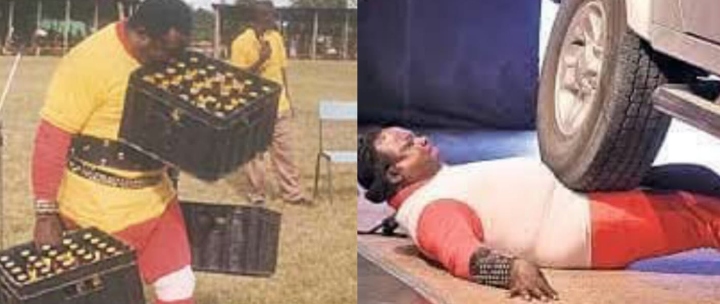
At first, there was the scream of timber, the groan of iron rims, and the thunder of coffee sacks sliding forward.
Then came the impossible sight: a young farmhand trapped beneath an ox-cart groaning under more than two tonnes of harvest, dust rising around him like smoke.
Villagers ran, certain they were rushing toward death. Instead, they found the young man alive, calm, and rising to his feet.
That was how legend entered the room.
His name was Conrad Njeru Karukenya. Kenya would know him by another name: Tiger Power, the country’s greatest stuntman, a man who spent decades turning pain into theatre and danger into applause.
When he died in January 2019 after a long illness, aged 72, it was more than the passing of a performer.
It was the fading of an era when fame was built not on screens but in dust-filled stadiums, roadside grounds and marketplaces where people came to witness a man challenge the laws of nature and sometimes seem to beat them.
The man who dared machines
Tiger Power did not simply perform. He stalked into arenas like a storm.
Crowds would gather in tightening circles, necks craned, children hoisted onto shoulders, murmurs spreading like grassfire.
Then he would lie flat on the earth, broad chest lifted, eyes fixed on the sky, as a Land Rover rolled toward him.
Engines growl differently when pointed at a human body.
The tyres crept closer. Mothers covered their faces. Men shouted warnings no one expected him to heed.
Then rubber climbed onto flesh, steel passed over bone, and the crowd froze in collective terror.
Moments later, Tiger Power would stand up, brush off the dust, flash a grin, and raise his arms to the heavens.
The place would erupt.
Again and again he made machines look hesitant. He let vehicles roll across his body, bent six-inch nails with his bare hands, dragged cars with his teeth, snapped chains, hoisted grown men like sacks of grain and stared down at objects that would make ordinary people step back.
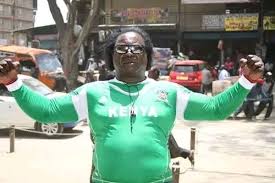
The late Tiger Power in action. Photo/courtesy
Strength forged in soil
Unlike polished modern athletes bred in laboratories of dieticians and sports science, Tiger Power came from the rough school of labour.
He grew up in Embu, where strength was practical before it was spectacular. It lived in lifting, digging, hauling and enduring.
The story of the overloaded ox cart became the origin myth because it captured something essential: his power was discovered in work, not performance.
By the time he became famous, he looked less like a celebrity than a figure hammered out of granite. Thick arms. Barrel chest.
The gait of a man who trusted his weight. He seemed to belong to another century.
Yet he understood showmanship with rare instinct.
He knew the value of silence before the stunt. He knew how fear ripens into suspense.
He knew that a smile after surviving the impossible was worth more than any speech. In that sense, Tiger Power was not merely strong.
He was a master storyteller who used muscle instead of words.
Fame’s bright lights, empty pockets
But applause is noisy, and hardship often arrives quietly.
Though widely known across Kenya and beyond, reports later showed a painful truth: Tiger Power’s fame did not translate into wealth.
The man who had thrilled presidents, schoolchildren and packed public grounds faced serious illness in later years, including kidney, lung and heart complications, while struggling financially.
It is a familiar cruelty. Nations celebrate entertainers while they are useful, then rediscover them when they are vulnerable.
READ ALSO: Doctors Discover Live Fly Inside Man’s Intestines During Colonoscopy
Still, even in hardship, Tiger Power kept surprising people.
In later life he pursued education and reportedly graduated from Kenyatta University with a degree in Early Childhood Education; proof that behind the giant public persona stood a man who refused to be trapped by yesterday’s fame.
PAY ATTENTION: Get in touch. Reach us at info@gotta.news.