The court found nighttime noise exceeding legal limits but declined to shut down three popular Kileleshwa entertainment establishments. NEMA and Nairobi County now have 30 days to investigate and enforce compliance.
For residents of Kileleshwa, the night has increasingly become an extension of the nightclub. Loud music, shouting and revving engines have allegedly replaced the quiet expected within residential neighbourhoods.
But a court battle over the disturbances has produced a mixed victory. The Environment and Land Court has ordered fresh noise assessments around three entertainment establishments. It has also directed the businesses to comply with environmental regulations.
However, Justice Charles Mbogo declined to shut down the establishments or revoke their operating licences.
In a judgement delivered on October 29, 2026, the court partly allowed a petition by Exeter Pearl Apartments Management Limited.
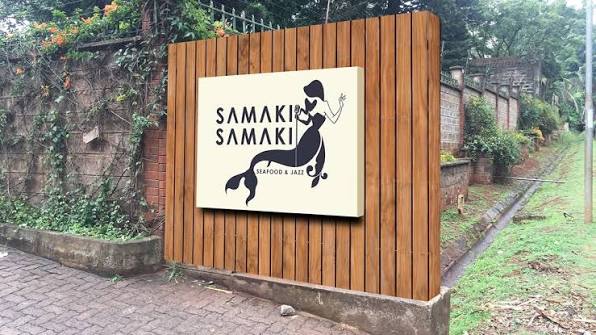
The dispute involved Bar Next Door, The Kettle House Bar and Grill, and Samaki Samaki Seafood and Jazz.
The judge found excessive nighttime noise within the affected neighbourhood.
However, evidence did not sufficiently establish each establishment’s individual contribution.
Sleepless Nights
The dispute arose from complaints about entertainment businesses operating near Exeter Pearl apartments along Othaya Road.
The petitioner accused the establishments of playing loud music, particularly during weekends. Their operations allegedly continued from approximately 6pm until 6am or 7am.
Residents also complained about shouting patrons, hooting motorists and revving vehicle engines.
The disturbances allegedly disrupted sleep, threatened residents’ wellbeing and undermined peaceful enjoyment of their homes.
Some residents reportedly spent nights elsewhere, while others relocated altogether.
The petitioner also claimed that the disturbances affected property values and discouraged prospective tenants.
The controversy had attracted attention before the litigation reached its final determination.
In June 2021, Nairobi Central Ward MCA Daniel Muturi Ngengi raised concerns about noise affecting Exeter Pearl residents.
In September 2022, then Kileleshwa MCA-elect Robert Alai publicly identified several establishments, including the three respondents.
Exeter Pearl eventually approached the Environment and Land Court in February 2024. It sought orders stopping the establishments from operating until the dispute was resolved.
An earlier application for conservatory orders failed in May 2025. The substantive constitutional petition, however, continued.
Numbers Matter
Competing environmental assessments became central to the judge’s determination.
An assessment by Theobald Luchidio recorded nighttime noise levels between 39.1 and 62.9 decibels. The average measurement near the apartments reached 44.59 decibels.
That exceeded the prescribed nighttime limit of 35 decibels. However, the expert could not attribute the entire exceedance to one establishment.
The measurements were taken at Gate 16 along Othaya Road. The assessors had reportedly been unable to access the apartments.
Traffic, hooting, vehicle engines and neighbouring businesses could also have contributed.
The Kettle House subsequently commissioned another assessment through environmental expert Faith Jerono Seroney.
Her January 17, 2026 measurements ranged between 20.28 and 35.54 decibels.
Although substantially lower, the highest reading still exceeded the nighttime threshold.
Meanwhile, Aeroscan Labs conducted another assessment for Exeter Pearl on February 6 and 7, 2026. Its measurements ranged between 48 and 81.5 decibels.
The competing reports presented the court with conflicting evidence. Soundproofing appeared to have reduced noise, yet residents continued reporting significant disturbances.
Justice Mbogo acknowledged the evidence but refused to overlook its limitations.
“The evidence establishes the existence of excessive nocturnal noise within the affected neighbourhood,” the judge observed.
However, the individual contribution of each establishment remained insufficiently established.
Licences No Shield
The first and second respondents defended their operations using business permits and environmental approvals.
The Kettle House also presented evidence of extensive soundproofing works. These included acoustic panels, double-glazed roofing and sound-insulating glass.
However, the judge rejected the suggestion that commercial approvals guaranteed unrestricted operations.
“The validity of such approvals does not authorise activities conducted in violation of environmental law,” the court stated.
The distinction carries significant implications for entertainment businesses operating near residential properties.
A business may possess valid licences but still violate environmental standards through its operations.
Nevertheless, the court declined to invalidate the establishments’ business permits and liquor licences.
The petitioner had not demonstrated that authorities issued those licences contrary to statutory requirements. Automatic revocation would also bypass procedures governing regulatory enforcement.
Regulators Ordered
NEMA’s inspection on July 22, 2026, had identified compliance concerns involving the three establishments.
Inspectors found that Samaki Samaki possessed sound-amplifying equipment capable of generating noise outside its premises.
The establishment also had outstanding environmental compliance requirements.
NEMA subsequently issued an environmental notice requiring corrective action. However, inspectors did not conduct formal decibel measurements.
The judge therefore ordered the fourth, fifth and seventh respondents to conduct comprehensive noise assessments within 30 days.
The exercise must cover all three establishments and the surrounding residential neighbourhood, including Exeter Pearl apartments.
After completing the assessment, regulators must enforce environmental requirements against businesses found violating applicable standards.
NEMA must also follow up on deficiencies identified during its July inspection, particularly those involving Samaki Samaki.
The court rejected demands for blanket business closures, preferring compliance and enforcement instead.
READ ALSO: Dandora Church Wins Noise Battle After Crucial Evidence Fails to Reach Court
Each party was ordered to bear its own legal costs.
For Exeter Pearl residents, the judgement offers constitutional recognition without an immediate guarantee of quieter nights.
For the establishments, it provides relief from closure but imposes continuing environmental obligations.
And for regulators, the 30-day deadline presents another opportunity to resolve a neighbourhood dispute.
PAY ATTENTION: Reach us at info@gotta.news.