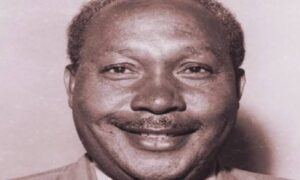
A Dandora homeowner claimed church noise ruined his family’s peace and drove away tenants. The court found his constitutional case properly framed but fatally short of evidence.
A seemingly ordinary neighbourhood quarrel in Dandora has ended with an important environmental law lesson.
George Wachira accused a neighbouring church of turning peaceful Sundays into an ordeal.
He said its worship services produced noise that invaded his home every weekend.
He also claimed the disturbance harmed his family’s health and disrupted their sleep.
Most significantly, Wachira alleged that tenants abandoned his building because of the noise.
But when the case reached court, one crucial ingredient was missing: objective proof.
Justice Grace Kemei delivered the judgement in early September 2026, in Nairobi.
The Environment and Land Court subsequently dismissed Wachira’s petition with costs.
The respondents included Pastor Benson Nyawira, Nairobi City County and NEMA.
The Sunday Battle
Wachira’s complaint centred on a remarkably short distance between the properties.
His building stood approximately 10 metres from Word and Faith Holy Ministries.
He claimed church noise blared every Sunday between 7am and 3pm.
According to his petition, the noise affected sleep, health and peaceful property enjoyment.
He further claimed some music contained vulgar material that affected his children.
The alleged disturbance, he argued, eventually became a financial problem too.
Wachira said tenants left because they could no longer tolerate the noise.
Pastor Nyawira presented a markedly different account of life inside the church.
He described Word and Faith Holy Ministries as a lawful place of worship.
Services, he said, were conducted peacefully during reasonable daytime hours.
The church used modest sound equipment so congregants could hear sermons clearly.
Nyawira also rejected suggestions that the church played obscene or offensive music.
He said its songs were gospel music promoting Christian values and peaceful coexistence.
That placed two legitimate interests on opposite sides of the dispute.
One involved freedom of worship, while the other concerned environmental and property rights.
Yet the judge eventually resolved the dispute without deciding those competing interests broadly.
The decisive question became much simpler: Where was the evidence?
A Door Stays Open
The church initially tried to end the case before its evidence was examined.
Its lawyers argued that Wachira had failed to exhaust environmental dispute-resolution mechanisms.
They also challenged whether the petition satisfied the constitutional threshold for litigation.
The judge rejected that preliminary attack, leaving the constitutional door firmly open.
Justice Kemei held that the court had jurisdiction over the environmental-rights complaint.
He noted that Article 42 protects every person’s right to a clean environment.
He also found Wachira’s allegations sufficiently specific to constitute a constitutional petition.
That was a decisive victory for Wachira, but it proved temporary.
The court had accepted his legal route without accepting his factual allegations.
In other words, Wachira had earned a hearing but still needed convincing evidence.
The preliminary objection was consequently dismissed with costs.
The Missing Proof
Kenya’s noise regulations do not simply ask whether neighbours find noise irritating.
They consider timing, proximity, frequency, intensity and amplification when assessing unreasonable noise.
The law therefore combines measurable sound levels with the circumstances surrounding the disturbance.
That requirement became the most significant obstacle for Wachira in the case.
He produced no official noise assessment establishing that the church exceeded permissible levels.
He called no expert witness capable of quantifying the alleged disturbance before the judge.
The court consequently had no objective measurement showing how loud the church actually became.
There was another potentially powerful piece of evidence that never made it before court.
Wachira referred to a video that allegedly demonstrated the church’s disturbing noise.
But the video was missing from the documents submitted through the court system.
Justice Kemei therefore could not assess what that recording actually showed.
For a case built around sound, that absence proved particularly damaging.
NEMA’s Missing Trail
Wachira had not simply complained to nobody before approaching court.
He had written to NEMA about the alleged noise from the neighbouring church.
NEMA acknowledged the complaint and referred it to Nairobi City County’s lead agency.
That referral could have supplied the independent evidence the courtroom eventually lacked.
Instead, there was no inspection report establishing that the church breached noise regulations.
There was no NEMA assessment confirming excessive noise or an environmental audit.
Neither NEMA nor Nairobi City County filed substantive responses to the petition.
The judge found that omission regrettable, but Wachira also faced an uncomfortable gap.
He never explained what happened after NEMA referred his complaint to the county.
The result was a courtroom record dominated by allegations rather than independent verification.
His financial claim suffered from an equally serious evidentiary weakness.
Wachira said tenants had fled because of the church’s noise.
Yet he produced no tenancy agreements, termination notices or comparable supporting documents.
The judge therefore found the alleged rental losses unsubstantiated.
The court ultimately reached a straightforward conclusion about the entire petition.
Without supporting evidence, it could not conclude that the noise was excessive.
Nor could it find that Wachira’s constitutional rights had actually been violated.
The petition was therefore dismissed with costs.
The ruling, however, carries a broader message for Nairobi’s noisy neighbourhoods.
Environmental complaints cannot rest solely on frustration, even when the grievance appears genuine.
Residents seeking court protection must build an evidentiary record capable of surviving scrutiny.
The judge specifically pointed toward noise diaries, recordings, photographs and witness statements.
She also highlighted correspondence, inspections and expert noise assessment reports as useful evidence.
READ ALSO: Mathare Landowner Demands KSh64.4 Million Over Safaricom Base Station
That guidance could prove more valuable than the dismissal itself.
For Wachira, the constitutional door opened, but the evidence could not carry him through.
For the church, the victory came without disproving every allegation made against it.
The court simply found that those allegations had not been proved to the required standard.
And in environmental litigation, that difference can determine everything.
PAY ATTENTION: Reach us at info@gotta.news.