Mombasa Cement accused Affordable Housing Programme contractor Broad Contractors of failing to pay for construction materials worth KSh73.76 million. But the High Court rejected its bid to freeze the firm’s assets, finding no clear evidence of an attempt to frustrate debt recovery.
The Affordable Housing Programme’s construction boom has brought contractors, suppliers and millions of shillings into the same commercial equation.
But when the bills go unpaid, the resulting disputes can travel all the way to court.
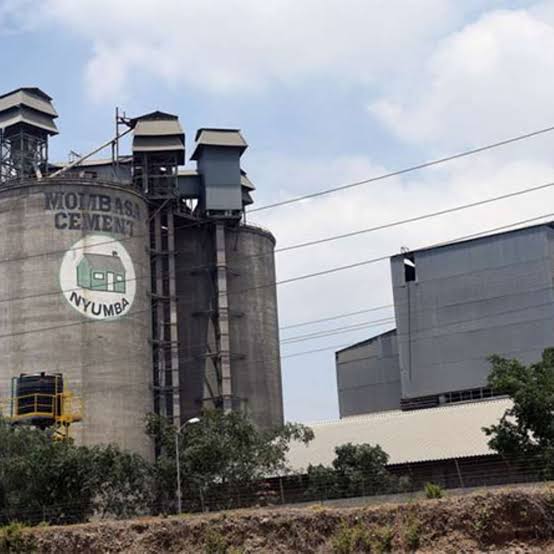
Mombasa Cement Limited now finds itself locked in a KSh73.76 million payment dispute with Broad Contractors Company Limited, a firm undertaking Affordable Housing Programme projects.
The cement supplier claims the contractor took cement, clinker and other construction materials on credit but failed to settle its outstanding invoices.
It wanted the High Court to freeze the contractor’s assets before the debt case proceeded to trial.
Instead, Justice Letizia Wachira dismissed the application on October 8, 2026, ruling that Mombasa Cement had not proved the contractor intended to frustrate a future judgement.
The decision leaves the alleged debt unresolved while delivering an immediate victory to the contractor.
It also draws a clear line between a disputed commercial debt and the evidence required to freeze a company’s assets.
Disputed Debt
The dispute arose from cement, clinker and other construction materials supplied to Broad Contractors on credit.
Mombasa Cement claimed the contractor received the goods through Local Purchase Orders but failed to settle outstanding invoices.
The supplier put the outstanding balance at KSh73,756,431.92, supported by invoices, delivery notes and statements of account.
It also relied on acknowledgements and other commercial records to support its claim.
Broad Contractors admitted purchasing construction materials on credit but disputed the amount claimed.
Its managing director, Parminder Singh Manku, filed a replying affidavit dated July 27, 2026.
The contractor argued that the parties needed to reconcile deliveries, quantities, quality and pricing before establishing the actual balance.
It alleged that some entries were duplicated or unconfirmed, while returns, rebates and credit notes remained unaccounted for.
Broad Contractors also denied agreeing to interest at 1.5 per cent monthly.
Mombasa Cement, however, maintained that the contractor had acknowledged the debt and was awaiting project payments.
Freezing Bid
Mombasa Cement filed its application on July 1, 2026, seeking orders to protect its potential recovery.
It wanted the court to freeze assets, compel financial disclosure and require security matching the alleged debt.
The supplier also sought information about bank accounts, construction contracts, retention monies and certified project payments.
It argued that preserving these assets would prevent a future judgement from becoming impossible to enforce.
Its application identified projects in Tezo, Kilifi and Chuka, alongside Affordable Housing Programme developments.
Broad Contractors acknowledged undertaking projects and expecting payments but rejected claims that it intended to frustrate creditors.
The contractor warned that freezing its accounts and receivables could cripple operations and jeopardise construction projects.
It said the restrictions could disrupt salaries, subcontractor payments, statutory obligations and other essential business expenses.
Broad Contractors also raised a separate claim by Corrugated Sheets Limited involving similar preservation requests.
It argued that overlapping orders could restrict the same pool of assets and intensify pressure on its business.
Legal Threshold
Justice Wachira focused on Order 39 Rule 5 of the Civil Procedure Rules.
The provision allows courts to require security where defendants intend to obstruct execution by disposing of property or removing it from jurisdiction.
The judge cited Kanyoko t/a Amigos Bar & Restaurant v Nderu & Others [1988] eKLR. That decision cautioned that attachment before judgement must not be exercised lightly.
The applicant must provide clear evidence of the conduct targeted by the rule. Demonstrating an unpaid debt alone does not satisfy that requirement.
Mombasa Cement argued that Broad Contractors could direct incoming project payments towards other obligations before satisfying its claim.
However, Justice Wachira found no sufficient evidence connecting those anticipated payments to deliberate efforts to defeat enforcement.
“There is no indication why the Plaintiff would think the contractor would direct payments elsewhere,” the judge reasoned.
The court found that anticipated receivables did not, by themselves, demonstrate an intention to dissipate assets.
The judge further observed that “mere indebtedness, financial difficulty, or a fear that the Defendants may not pay” was generally insufficient.
The ruling therefore rejected the argument that the contractor’s expected project payments justified freezing its assets.
The court required evidence of deliberate obstruction, not speculation about how incoming funds might be spent.
Debt Unresolved
The court dismissed Mombasa Cement’s application as unmerited and awarded costs to Broad Contractors.
The ruling did not determine whether the contractor ultimately owes the full amount claimed.
Broad Contractors disputed the figures and sought reconciliation of invoices, rebates, credit notes and other account entries.
Those issues remain unresolved by the application, which concerned interim asset protection rather than final liability.
The decision carries an important lesson for commercial creditors seeking security before trial.
Documentary evidence of supplies and non-payment may support a money claim, but freezing assets requires additional proof.
READ ALSO: Mombasa Cement Wins KSh1.65 Billion Insurance Fight With Kenindia Over Collapsed Silo
For Broad Contractors, the ruling allows its business operations to continue without the requested preservation orders.
However, it does not extinguish any debt that Mombasa Cement may eventually prove.
The supplier’s immediate attempt to secure its claim has failed.
Its underlying demand for KSh73.76 million remains a separate question for determination through litigation.
PAY ATTENTION: Reach us at info@gotta.news.