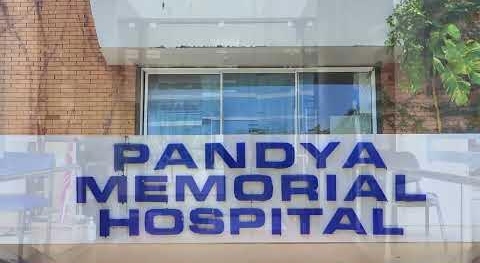
The High Court slashed a KSh12.5 million hospital debt claim after finding that a ten-year guarantee remained unenforceable when the hospital sued.
Pandya Memorial Hospital has lost a KSh6.78 million claim after the High Court found it prematurely enforced a 10-year payment guarantee.
Justice Nabil M. Orina overturned a magistrate’s judgement awarding the Mombasa hospital KSh12.52 million against Kukaa Mwangovya Gari and Sarah Dzombo.
In a judgement delivered on October 8, 2026, the court reduced the recoverable principal to KSh5,698,956.
The award covers medical expenses incurred by a mother whose treatment at the hospital generated a separate contractual dispute.
The judge upheld the appellants’ liability for her outstanding bill but rejected the premature claim concerning her newborn’s hospital expenses.
The decision highlights a crucial distinction between proving a debt exists and establishing that contractual obligations are immediately enforceable.
The Bills
The dispute arose from treatment provided to a mother identified as END and her newborn, Baby EN, in 2015.
END was admitted on April 18 before delivering her baby, who was admitted the following day.
The mother was discharged on August 31, while the baby was left in hospital on October 2.
Pandya Memorial Hospital claimed KSh5,738,956 remained outstanding on the mother’s account after subsequent adjustments.
The newborn’s account carried another KSh6,778,757, bringing the combined claim to KSh12,517,713.
The hospital sued both Gari and Dzombo, relying on payment undertakings and admission documents.
Chief Magistrate Josephat Kalo ruled for the hospital on July 30, 2025, ordering both defendants to pay the entire amount jointly and severally.
The appellants challenged that decision, arguing that the magistrate had overlooked contractual deadlines and disputed accounting records.
The Guarantee
The central dispute concerned a guarantee Gari signed on September 14, 2017, covering the newborn’s KSh6,778,757 hospital bill.
The document stated: “I guarantee and irrevocably bind myself to pay… Kshs.6,778,757/- within a period of 10 years.”
However, the hospital filed its suit in November 2019, barely two years after the guarantee was executed.
The hospital argued that ordinary guarantee principles permitted recovery once the underlying debt became payable.
Justice Orina accepted that general principle but insisted that the specific agreement govern when enforcement becomes possible.
“The instrument itself remains the starting point for determining when the guarantor’s obligation crystallises,” the judge stated.
The guarantee specified no monthly instalments, annual payments or alternative deadline before September 2027.
The hospital also failed to establish an earlier contractual trigger that had placed Gari in default.
Its credit controller, Rastus Ouma Okochi, acknowledged during cross-examination that the 10-year period had not elapsed.
The judge therefore found that the hospital had not established an enforceable default under the guarantee when proceedings began.
The decision did not extinguish the underlying debt or permanently release Gari from his contractual undertaking.
Instead, it prevented the hospital from enforcing that particular guarantee prematurely through the suit.
Separate Debts
The court rejected the magistrate’s approach of treating both hospital accounts as one undifferentiated debt.
An agreement dated September 1, 2015, signed by both appellants, concerned the mother’s hospital expenses.
That agreement recorded KSh6,451,227 and required payment by August 2017.
The deadline had expired before the hospital filed suit, making the obligation enforceable.
Gari could not use his later guarantee to postpone liability arising under the earlier agreement, the judge ruled.
Dzombo also signed admission documents accepting responsibility for outstanding hospital fees and expenses.
She argued that emergency circumstances forced her to sign documents securing treatment for her daughter and granddaughter.
The judge acknowledged the pressure but found insufficient evidence of unlawful coercion or undue influence.
Dzombo admitted signing the documents and confirmed that she could read and write.
The court concluded that urgency alone could not invalidate the contractual undertakings.
Both appellants therefore remained liable for the mother’s account, subject to the correct outstanding balance.
Missing Payments
The High Court also faulted the hospital for failing to demonstrate adequately how it accounted for payments received before litigation.
Gari had made two payments of KSh20,000, on May 21 and August 15, 2019.
The hospital maintained that it had deducted the KSh40,000 before calculating the outstanding balance.
However, the customer statement supporting the mother’s account predated those transactions.
The court found no sufficiently clear updated statement showing how the payments were reconciled.
“Submissions are not evidence,” the judge observed while examining the disputed accounting.
He consequently deducted KSh40,000 from the mother’s claimed balance, reducing it to KSh5,698,956.
The judge also noted that the 2015 agreement recorded a different balance from subsequent account statements.
He declined to treat that discrepancy as fatal, noting that later adjustments could explain the difference.
Nevertheless, the hospital had to establish the amount actually outstanding when proceedings commenced.
Jurisdiction Rejected
The appellants also argued that the magistrate exceeded the KSh20 million pecuniary jurisdiction limit.
They claimed that interest and costs pushed the total decree beyond that statutory ceiling.
Justice Orina rejected the argument because the original principal claim stood at KSh12,517,713.
He held that interest accruing during litigation could not retrospectively invalidate jurisdiction properly exercised when proceedings began.
The court distinguished Phoenix of E.A. Assurance Company Ltd v S.M. Thiga, which concerned a court lacking jurisdiction from inception.
The Final Award
The High Court set aside the original decree and substituted a substantially reduced award.
Both appellants must jointly and severally pay KSh5,698,956 for the mother’s outstanding hospital account.
The principal sum attracts interest at court rates from November 6, 2019, until payment in full.
The KSh6,778,757 claim under the September 2017 guarantee was dismissed as premature.
Each party must bear its own costs of the appeal and the subordinate court proceedings.
The judgement leaves the hospital with a substantial recovery but exposes weaknesses in its enforcement strategy.
READ ALSO: Court Orders Pandya Memorial Hospital to Pay KSh6M Over Child’s Arm Amputation
For creditors, the message is clear: proving invoices does not automatically establish every defendant’s immediate liability.
Payment guarantees must be enforced according to their wording, while account statements must reflect payments already received.
Ultimately, Pandya Memorial Hospital proved the underlying debt but failed to justify recovering the entire amount immediately.
PAY ATTENTION: Reach us at info@gotta.news.