Mombasa Cement, owned by the late billionaire and philanthropist Hasmukh K. Patel, had secured a one-year KSh3 billion insurance cover from Kenindia Assurance.
The policy protected the company’s machinery and equipment against breakdowns while also covering loss of profits and other risks at its plant.
For 15 years, a collapsed industrial silo has remained at the heart of an expensive insurance battle.
Now, the High Court has delivered a decisive verdict favouring Mombasa Cement Limited.
Justice Njoki Mwangi ordered Kenindia Assurance Company Limited to pay KSh1.647 billion.
The award covers the destroyed blending silo and profits lost during production stoppages.
The judgement, delivered in mid-August 2026, settled a dispute dating back to 2011.
But the ruling also offers a revealing lesson about insurance contracts.
It shows how seemingly technical wording can trigger billion-shilling disputes between major companies.
Silo Collapse
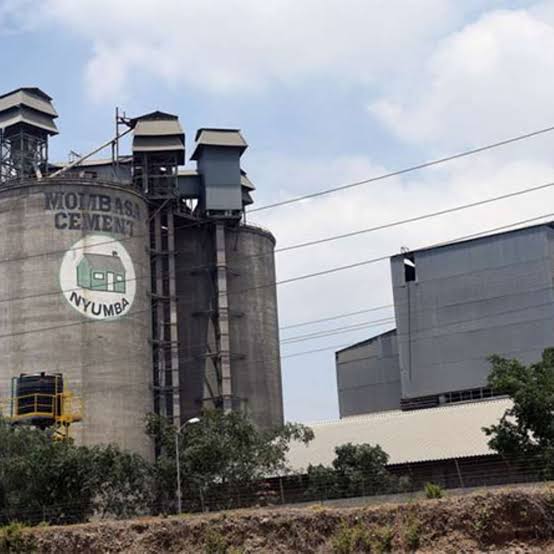
The dispute began when Mombasa Cement’s blending silo collapsed on August 1, 2011.
The silo stood at the company’s cement manufacturing facility in Vipingo, Kilifi County.
At the time, Mombasa Cement held two insurance policies issued by Kenindia.
The machinery policy provided coverage up to KSh3 billion for machinery damage.
A separate policy provided approximately KSh1.062 billion against losses following machinery breakdown.
The collapse disrupted clinker production and forced the company into costly reconstruction.
Investigators subsequently identified several factors behind the structural failure.
Those included defective materials, faulty design, erection faults and poor workmanship.
They also identified inadequate skill and other construction-related deficiencies.
For Mombasa Cement, however, those findings supported its insurance claim.
The policy expressly covered several of those risks.
Kenindia saw the situation differently.
Coverage Fight
The insurer’s central argument was that the blending silo was never properly covered.
Kenindia drew a distinction between machinery supplied by Thyssenkrupp India and civil works.
It argued that Mulji Devraj & Brothers constructed the silo’s reinforced concrete structure.
The insurer therefore characterised the structure as civil works rather than insured machinery.
Mombasa Cement strongly rejected that interpretation.
It pointed to the policy schedule, which expressly referred to the blending silo.
The company also argued that the silo was integral to its clinkerisation process.
The court ultimately accepted Mombasa Cement’s interpretation.
Justice Mwangi declared that the blending silo was covered under the Machinery Insurance Policy.
That finding effectively dismantled Kenindia’s central defence.
The Court also considered Mombasa Cement’s earlier request for periodic risk surveys.
The company had warned that its extensive machinery schedule was not exhaustive.
It invited Kenindia to inspect the plant and properly assess the risks.
Kenindia did not conduct the requested survey before the collapse.
The judge consequently found insufficient evidence of material non-disclosure.
Experts Clash
The battle subsequently moved from policy wording into competing financial assessments.
Mombasa Cement relied principally on Toplis & Harding International Limited.
Its assessment placed material damage at KSh664.77 million.
It separately calculated lost profits at KSh982.43 million.
Kenindia’s experts produced substantially lower figures.
Milind Bhatawadekar assessed material damage at roughly KSh506.1 million.
Business interruption losses were placed at approximately KSh221.3 million.
That produced a combined assessment of about KSh727.4 million.
Kenindia eventually accepted liability for only KSh393.02 million.
The insurer also invoked an Average Clause based on alleged underinsurance.
It compared the KSh3 billion insured value against replacement exposure exceeding KSh3.669 billion.
That produced an insurance ratio of approximately 81.76 per cent.
But the court was unconvinced by the insurer’s lower assessment.
It noted that Kenindia’s experts had initially produced significantly higher figures.
McLarens Young, for instance, initially assessed material damage at approximately KSh1 billion.
Its initial business interruption assessment was approximately KSh600 million.
Those assessments came before the insurer firmly adopted its uninsured-silo position.
The Court ultimately preferred Toplis & Harding’s methodology.
Its assessment considered production records, sales data, and financial statements.
It also examined the interruption caused by the destruction of the blending silo.
The Big Award
The court separately examined the business-interruption claim.
Kenindia argued that Mombasa Cement’s calculations overstated its lost profits.
It also argued that saved overheads should reduce the eventual compensation.
The judge accepted that genuine savings should ordinarily be deducted.
However, Kenindia did not provide enough accounting evidence proving those savings.
The Court therefore found no demonstrated error warranting a major reduction.
It accepted the Toplis & Harding assessment of the lost profits.
The judge also found that the silo’s collapse directly interrupted clinker production.
That interruption consequently caused losses covered by the business interruption policy.
Justice Mwangi ultimately awarded Mombasa Cement KSh664,767,843 for material damage.
She awarded another KSh982,434,033 for lost profits.
The combined award therefore came to KSh1,647,201,876.
The Court additionally ordered interest at court rates from the suit’s filing date.
Mombasa Cement was also awarded the costs of the litigation.
The judge, however, stopped short of imposing punitive interest.
She said the dispute involved genuine and complex questions surrounding coverage and valuation.
Kenindia’s unsuccessful position was therefore not considered frivolous or dishonest.
Yet the financial consequences remain enormous.
A claim Kenindia had reduced to about KSh393 million has become a KSh1.647 billion judgement.
Interest has continued accumulating while the parties await final settlement.
For insurers, the message is particularly clear.
READ ALSO: Sonko’s KSh1.4 Billion Bank Trail Ends in KSh385 Million KRA Tax Battle
Policy schedules, risk inspections, and exclusions can become decisive years later.
For businesses, the case demonstrates why seemingly routine insurance wording deserves careful scrutiny.
For Mombasa Cement, meanwhile, the ruling brings an extraordinary chapter closer to its conclusion.
What began with a collapsed silo has ended with one of Kenya’s most striking commercial insurance awards.
PAY ATTENTION: Reach us at info@gotta.news.