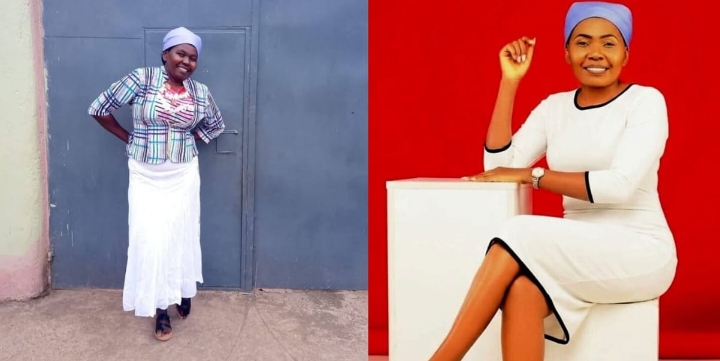
In the beginning, there was a quiet rhythm to Triza Mamake Muraya’s life: the soft shuffle of sandals on packed earth, the rustle of long Akorino skirts, and the unhurried cadence of a woman rooted in faith, family, and the routines of rural Gatundu.
She dressed the way many Akorino women do: modestly, deliberately, almost invisibly. Long pleated dresses. Covered hair. Minimal adornment.
A life lived largely in the background of her husband, gospel singer and philanthropist Karangu Muraya.
Back then, she was not a headline. She was a presence.

Photo: Courtesy/Facebook
And then, everything shifted.
The break that became a beginning
The separation from Karangu Muraya did not just fracture a marriage; it detonated a reinvention.
What had been a private life spilt into the unforgiving theatre of social media.
Pain, betrayal, and public scrutiny collided. Yet in that rupture, something else took root: visibility.

According to Kenyan media reports, Triza Muraya moved from a largely unseen domestic life into a rapidly expanding online persona, a shift that saw her embrace fashion, beauty, and influence in equal measure.
The transformation was not subtle. It was cinematic.
Gone were the layered, ankle-length silhouettes. In their place: figure-hugging dresses, sharp tailoring, bold colour, and confident posture.

Photo: Courtesy/Facebook
Makeup sculpted her features; styling reframed her presence. Where once she blended into the margins, she now commanded the frame.
She didn’t just change clothes. She changed language, the visual language of who she was allowed to be.
The making of a “baby girl”
Online, the rebrand was swift and ruthless in its clarity.
Followers watched in real time as Triza, once self-described as “kienyeji”, a village girl, stepped into a polished, almost editorial aesthetic.
Sleek heels replaced flat sandals. Structured dresses replaced flowing robes. Sunglasses, handbags, and curated poses followed.

The internet gave her a new name: “baby girl”.
But beneath the gloss was strategy.
She became a brand.
Endorsements followed, from food products to travel and lifestyle deals, marking her transition from subject of sympathy to architect of her own economy.
Social media, once a site of personal exposure, became a marketplace of reinvention.
And with each post, each photoshoot, each carefully lit frame, she tightened her grip on a new narrative: not abandoned, but ascendant.
Between faith, fame, and freedom
Yet the transformation is not without tension.
The headscarf, that enduring symbol of Akorino identity, remains. A thread connecting past to present. From tradition to reinvention.

Photo: Courtesy/Facebook
She has not fully abandoned where she came from. Instead, she has reinterpreted it.
This is what makes the transformation compelling: it is not a clean break but a negotiation.
Between faith and fashion. Also between expectation and self-expression. Between the woman she was and the woman she is becoming.
A life rewritten in public
What makes Triza Muraya’s story resonate is not just the visual contrast, though it is striking, but the velocity of it.
A woman, previously relegated to the margins of a man’s story, now occupies the central stage of her own narrative.
READ ALSO: Has Millicent Omanga Parted Ways with Doctor Husband?

The before-and-after images, the ones that ripple across timelines and WhatsApp groups, tell a simple story on the surface: glow-up, makeover, reinvention.
But look closer, and it becomes something sharper. This is not just transformation. It is authorship.
PAY ATTENTION: Reach us at info@gotta.news.