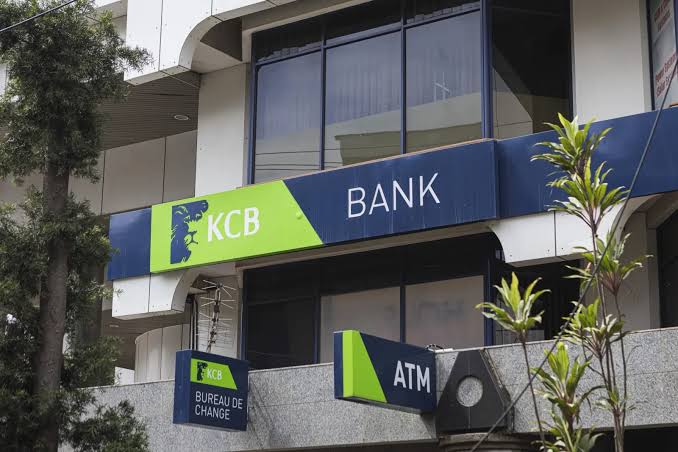
KCB Bank must pay a former senior banker KSh 7.4 million after failing to notify the labour office before declaring her position redundant. The Court of Appeal upheld the unfair termination finding but overturned a separate KSh 5 million discrimination award. It also rejected her multimillion-shilling claims for lost earnings, business commissions and salary increments.
KCB Bank has lost a costly legal battle over the dismissal of a senior banker. The Court of Appeal found that the bank’s redundancy process was fundamentally defective.
Its failure to notify the labour office proved decisive.
Three appellate judges described the process in unusually blunt terms.
“This in itself rendered the whole redundancy process a sham,” they declared.
The ruling leaves KCB facing a KSh 7.4 million compensation bill. However, the bank escaped several other substantial claims brought by its former employee.
Years of Tension
Caroline Wanjiku Karanja joined KCB on September 1, 2008. She was employed permanently as a Senior Relationship Manager in Corporate Institutional Banking.
Her career later took her into senior management.
In January 2017, she became Head of Government and International Organisations Corporate Banking.
She moved to Mombasa in June 2018 as Head of Business Development for the Coast Region.
But Karanja told the Employment and Labour Relations Court that her working environment deteriorated.
She accused the bank of systematically sidelining her from important professional opportunities.
Her complaints included exclusion from training and the absence of performance appraisals. She also cited salary stagnation and unpaid travel reimbursements.
She alleged that access to important meetings and internal systems was restricted. She further claimed the bank interfered with her personal phone and Gmail account.
By December 2021, she said she had proposed involuntary retirement or secondment. KCB declined those proposals.
Redundancy Dispute
On March 1, 2022, KCB issued her with a redundancy notice. The bank said restructuring had eliminated her position.
The notice followed a meeting held on February 24, 2022. KCB maintained that the restructuring aimed to improve organisational efficiency and effectiveness.
The bank’s witness, Robley Ngoje, said employees were invited to apply for positions. Those roles formed part of the institution’s new organisational structure.
Karanja did not apply, the witness told the court. He maintained that she lacked the skills required for the available positions.
KCB subsequently paid her KSh 5,639,728.93 in terminal benefits. But the former banker challenged the legality and fairness of her departure.
In October 2023, the Employment and Labour Relations Court ruled in her favour. Justice Monica Mbaru found that the termination was unfair and that discrimination had occurred.
The court awarded KSh 7,407,700, equivalent to 10 months’ salary. It also granted KSh 5 million in general damages for discrimination.
The judge further ordered KCB to preserve her staff mortgage and loan rates until repayment. Reinstatement was considered impractical because the employment relationship had become hostile.
A Sham Process
KCB appealed, challenging the findings and the financial awards. Karanja filed a cross-appeal, seeking substantially higher compensation.
The appellate judges examined whether KCB had complied with Section 40 of the Employment Act. The provision establishes mandatory safeguards before an employer declares employees redundant.
These include notification to the employee and the labour officer. Employers must also observe fair selection criteria and settle statutory payments.
The judges stressed that consultation must be genuine, not merely a formality. They relied on previous appellate decisions addressing procedural fairness in redundancy exercises.
The central problem was straightforward. KCB produced no evidence showing that it had notified the labour office.
That omission proved fatal to the bank’s case. The judges held that the redundancy process failed the statutory requirements.
They upheld the finding that KCB had not established a valid and fair termination. The bank had also failed to demonstrate compliance with the required procedure.
The court emphasised that a potentially genuine business reason cannot excuse procedural illegality. A redundancy must satisfy both substantive and procedural fairness requirements.
Millions Rejected
Despite upholding unfair termination, the judges rejected Karanja’s discrimination claim. They set aside the KSh 5 million award granted by the employment court.
The appellate court said discrimination requires substantial and convincing evidence. Karanja had not sufficiently demonstrated that colleagues received preferential treatment on prohibited grounds.
The judges also rejected her claim for KSh 248 million in business-related compensation. She had argued that she deserved one per cent of business generated.
Her claim was based on approximately KSh 6.1 billion in annual business. But she produced no contract establishing entitlement to such a commission.
The court equally dismissed her claim for salary stagnation and automatic annual increments. It found no contractual guarantee of the increases she sought.
KCB’s guidelines also placed bonuses at the discretion of the Group Board. They did not create an automatic entitlement to bonus payments.
Another major claim involved KSh 132.6 million in projected future salary. Karanja sought earnings covering the remaining 89 months before retirement.
The judges rejected that demand. Her contract did not guarantee employment until retirement or future salary increases.
They also declined to rewrite the employment agreement. The court said contractual entitlements must be established through evidence.
READ ALSO: Court Blocks Bank From Auctioning Woman’s Household Goods Over Husband’s Debt
In its final orders, the Court of Appeal retained the KSh 7,407,700 compensation award. The amount remains subject to statutory deductions.
It set aside the KSh 5 million discrimination award. Both the appeal and cross-appeal partially succeeded, with each party ordered to bear its own costs.
The decision delivers a mixed outcome. KCB escaped potentially enormous financial claims but could not defend its redundancy procedure.
For employers, the message is clear. Restructuring does not remove the obligation to follow the law.
PAY ATTENTION: Reach us at info@gotta.news.