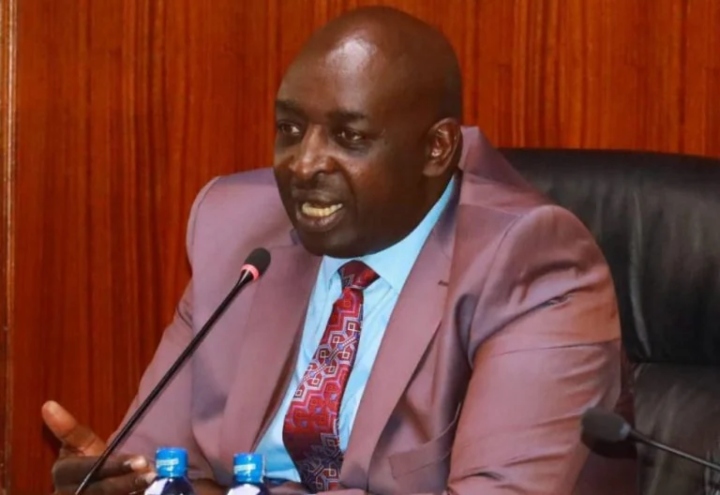
Editor’s Note: Nairobi resident Brian Mosoti examines James Gakuya’s growing gubernatorial ambitions, his City Hall experience, and whether his development vision could offer Nairobi a fresh start in 2027.
Nairobi is a city that is losing its patience. Its streets are choking with garbage, parking disputes, and dysfunctional public services.
Yet City Hall continues producing magnificent speeches about transformation.
For residents, however, the difference between rhetoric and reality has become painfully apparent.
As the 2027 gubernatorial contest gathers momentum, one name increasingly deserves serious examination: Embakasi North MP James Mwangi Gakuya.
The prospect of a Gakuya governorship is not simply another political ambition.
It raises fundamental questions about Nairobi’s leadership history, regional representation, and the administration residents desperately need.
The One-Term Jinx
Since the advent of devolution, Nairobi has witnessed an extraordinary succession of gubernatorial administrations.
Evans Kidero served from 2013 to 2017 before losing his re-election bid to Mike Sonko.
Sonko’s administration ended prematurely following his impeachment in December 2020.
Johnson Sakaja subsequently won the 2022 election.
Their circumstances were different, but the underlying story remains revealing.
Kidero arrived with an impressive corporate résumé. Yet his administration struggled with corruption allegations, entrenched cartels, and disappointing service delivery.
Sonko offered a contrasting leadership style. His administration pursued tangible infrastructure projects, including markets, fire stations, and Dandora Stadium.
He also repeatedly complained about powerful cartels frustrating his administration.
His impeachment, however, demonstrated that development ambitions alone cannot guarantee political survival.
Sakaja arrived with considerable political charisma and polished communication skills.
His campaign promised a transformed capital. But translating those promises into measurable improvements remains a significant challenge.
Consider the numbers. Between July 2024 and March 2025, Nairobi spent only KSh2.43 billion on development.
This represented 17 per cent of its development budget absorption.
Meanwhile, recurrent expenditure consumed KSh19.38 billion.
These figures raise serious questions about priorities and administrative effectiveness.
The city’s persistent garbage problems and controversial parking enforcement have further intensified public frustration.
Residents increasingly want measurable results rather than another round of political promises.
Enter Bazenga
This context is where Bazenga Gakuya’s background becomes particularly relevant.
Unlike candidates whose relationship with City Hall begins during election season, Gakuya understands its institutional history.
He served as a Nairobi City Council councillor between 2002 and 2013.
He subsequently entered Parliament, representing Embakasi North for three consecutive terms.
That political journey matters.
Having experienced municipal government before transitioning into national politics, Gakuya understands the relationship between local administration and national legislation.
His experience could prove valuable when confronting bureaucratic complications surrounding waste management, transport, urban planning, and revenue collection.
More importantly, his development proposition addresses problems residents encounter daily.
Garbage collection, better drainage, improved roads, and efficient service delivery are practical priorities.
They require less political theatre and considerably more administrative discipline.
Naturally, experience does not automatically translate into successful leadership.
Gakuya would need convincing implementation plans, transparent budgeting, and an accountable administration.
Nevertheless, his familiarity with the city’s institutional machinery provides an important starting point.
The Mt Kenya Factor
Perhaps the most intriguing dimension of Gakuya’s potential candidature lies in Nairobi’s political arithmetic.
Politics is local, and regional coalitions remain influential in determining electoral outcomes.
Nominated Senator Karen Nyamu recently observed that James Gakuya could enjoy an advantage if he successfully galvanised the Mt Kenya electorate in Nairobi.
That argument deserves attention.
The community commands considerable political influence within Nairobi.
Yet it has previously supported leaders from different communities, demonstrating the importance of broader political alliances.
Since 2013, Nairobi has elected Kidero, Sonko, and Sakaja, reflecting changing political coalitions.
However, the 2027 national political environment could produce different calculations.
If Mount Kenya lacks a formidable presidential contender, gubernatorial representation could become increasingly attractive.
Still, numerical strength alone cannot deliver City Hall. Gakuya would need support beyond his traditional political constituency.
A Different Proposition
There is something politically significant about a leader who understands City Hall before seeking its highest office.
James Gakuya has spent years navigating Nairobi’s political landscape, first as a councillor and subsequently as an elected legislator.
His three parliamentary victories also demonstrate an established relationship with voters.
The challenge now is translating that experience into a credible citywide proposition.
He must articulate how he would confront parking cartels, modernise garbage collection, and improve county revenue management.
He must also explain how ordinary residents would experience better services under his administration.
Nairobi does not need another governor who mistakes eloquence for achievement.
READ ALSO: WATCH: Johnson Sakaja Rolls Into Parliament in KSh20 Million Mercedes as Nairobi Rots in Plain Sight
It needs leadership measured through functioning systems, cleaner neighbourhoods, and accountable spending.
The city’s gubernatorial history offers important lessons. Its next chapter should be determined by experience, ideas, and demonstrable capacity.
Gakuya’s proposition offers Nairobi an opportunity to rethink its leadership and embrace a fresh chapter built on experience, practical solutions, and renewed ambition.
PAY ATTENTION: Reach us at info@gotta.news.