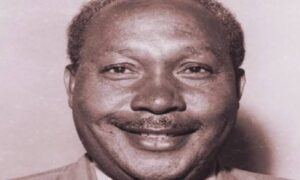
The gospel singer’s company accuses Mkononi Limited and its director of exploiting his music without proper accounting, while Safaricom and MCSK face questions over royalties allegedly paid to the defendants.
Sifaeli Mwabuka, a Tanzanian gospel singer, is fighting over royalties for dozens of songs in the High Court.
Mwabuka’s company is seeking answers over music distribution, licensing agreements, and payments allegedly collected without proper authorisation.
In a ruling delivered on October 8, 2026, Justice Letizia Wachira rejected competing applications in the copyright dispute.
The judge declined to stop digital distribution but refused to terminate the lawsuit against Mkononi Limited and its director.
Mwabuka confirmed to this publication that the plaintiff company, Sifaeli Mwabuka Mkononi Limited, belongs to him.
Legally, however, the company is the plaintiff, not Mwabuka personally.
The distinction matters because the court must determine the claims brought by the company.
The singer’s ownership of that company does not, by itself, establish personal ownership of every disputed right or entitlement to royalties.
Royalty Dispute
The company alleges that Mkononi Limited and director Baraka Liyai Khanyanji commercially exploited Mwabuka’s musical works without proper consent.
The alleged activities date back to 2017 and involve several digital distribution channels.
According to the pleadings summarised in the ruling, the defendants supplied the music to Believe Music, also known as Believe Backstage Music.
The international distributor allegedly made the works available worldwide.
The company also alleges that Safaricom paid royalties to the defendants for the music from 2017 onwards.
It claims the Music Copyright Society of Kenya paid them royalties in 2020, 2022, and January 2023.
The company went to court seeking removal of the disputed works from digital platforms.
It also wanted Safaricom restrained from distributing them through its Skiza service and disputed royalties withheld.
Mkononi offered a different account, maintaining that the distribution occurred under contractual arrangements authorised by the company.
It claimed an agreement provided Mwabuka with 70 per cent of revenue, leaving 30 per cent to the defendants.
The dispute, therefore, centres on whether the defendants exceeded their authority or operated within agreed licensing terms.
The court has yet to determine that question.
Who’s Who?
Mkononi Limited is the first defendant and the principal company accused of distributing the disputed music.
It denies infringement and maintains that its dealings were authorised.
Khanyanji, the second defendant, is a director of Mkononi Limited.
The plaintiff alleges he personally participated in negotiations, licensing, distribution, and royalty arrangements.
Khanyanji argues that he acted as the company’s representative rather than in his personal capacity.
The court nevertheless ruled that the allegations against him require examination at trial.
Safaricom Limited, the third defendant, features in the dispute over music distribution through its Skiza platform.
The plaintiff alleges it paid royalties to the first and second defendants for his works.
The fourth defendant, Music Copyright Society of Kenya, is implicated in allegations concerning royalty payments made in 2020, 2022, and January 2023.
The ruling does not establish that either Safaricom or MCSK acted unlawfully.
The case therefore involves distinct alleged roles, rather than four defendants facing identical accusations.
The evidence must establish each party’s involvement and any resulting legal liability.
Injunction Fails
Justice Wachira found that the company had not established a prima facie case justifying immediate injunctive relief.
The judge relied on Giella v Cassman Brown & Co Ltd [1973] EA 358, which sets out the requirements for temporary injunctions.
The ruling also cited Mrao Ltd v First American Bank of Kenya Ltd & Others [2003] eKLR. That precedent requires evidence of an apparent infringement of a legal right.
The judge found the company’s assertions insufficient to establish authorisation, infringement, or entitlement to royalties.
Consequently, the court did not proceed to assess irreparable harm or the balance of convenience.
A separate procedural defect compounded the setback. The commissioner for oaths’ stamp on the supporting affidavit lacked the commissioner’s signature.
Citing Githua v Estate of Kimani & Others [2025] KEELC 910, the judge treated the omission as fundamental.
The affidavit was struck out, and the application seeking an injunction was dismissed.
The decision does not establish that the defendants lawfully exploited the music.
It means the company failed to meet the threshold for immediate court intervention.
Trial Ahead
Mkononi and Khanyanji separately sought to strike out the entire suit or remove the director.
They argued that the company’s separate legal personality protected him from personal liability.
The plaintiff company countered that the pleadings raised genuine questions requiring a full hearing.
Justice Wachira agreed that the allegations could not safely be determined summarily.
Relying on D.T. Dobie & Company (Kenya) Ltd v Muchina & Another [1980] eKLR, the judge warned against prematurely terminating cases raising triable issues.
The court identified questions about licensing, alleged infringement and royalties, alongside Khanyanji’s alleged personal participation.
READ ALSO: Daddy Owen sued by Congolese musician over KSh 2 million unpaid royalties
His continued presence in the proceedings does not establish personal liability.
Both applications were dismissed, with costs reserved until the suit’s outcome. The company secured no immediate injunction, while the defendants failed to terminate the litigation.
The trial must now determine whether the distribution exceeded authorised rights and whether royalties remain payable.
Until then, the competing allegations remain unresolved.
PAY ATTENTION: Reach us at info@gotta.news.