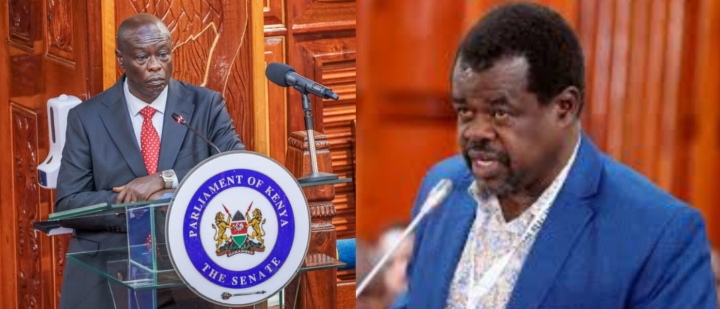
For months, the impeachment of former Deputy President Rigathi Gachagua in October 2024 has hung over Kenya like unfinished business.
Now, a resurfaced clip of Okiya Omtatah on the Obinna Show has reopened those wounds once more.
The video, now racing across X at breakneck speed, begins not with fury, but with eerie calm.
Omtatah does not sound shocked by what he is revealing. He sounds like a man revisiting a truth he has already wrestled with privately.
“I was offered KSh 10 million,” he says.
Then comes the line that detonated online.
“They paid a deposit of KSh 7 million to people and KSh 3 million after the voting.”
Suddenly, Kenya was dragged back into those suffocating weeks when the government seemed to be turning against itself, and the impeachment of Riggy G stopped looking like ordinary parliamentary business and began resembling a political siege.
The impeachment motion tore through government ranks with startling brutality because the attack was not coming from the opposition.
It was emerging from within the same political machine that had carried Gachagua to power barely months earlier.
By then, the former deputy president had already become one of the most polarising figures in government.
Critics portrayed him as reckless, abrasive, and politically volatile. Meanwhile, his allies argued that he was being sidelined for resisting the pressure to submit to the changing power dynamics within the administration.
Frenzy
But amid the frenzy, Omtatah says he focused on something colder and far less emotional: the Constitution.
“One thing I say is an innocent man, even the devil gives him his dues,” he remarked.
For the Busia senator, better known for courtroom petitions than parliamentary theatrics, the issue was never personal loyalty to Riggy G.
In fact, he openly acknowledged he did not necessarily agree with him politically.
His objection, he says, was procedural.
Omtatah pointed to Article 150 of the Constitution, which provides that the process used to impeach a president should apply to a deputy president “with necessary amendments”.
According to him, those amendments were never properly made.
“And I said we, even in the National Assembly, did not get the necessary amendments when impeaching this man,” he recalled.
“Can we go back and get the law right?”
To many politicians, that may have sounded like technical legalism. To Omtatah, it was the entire case.
He argued that unlike a sitting president, a deputy president does not enjoy sweeping immunity from criminal or civil litigation.
The rise and fall of Gachagua
Gachagua becomes the first DP to be impeached in Kenya
Impeachment leaves Gachagua minus perks, privilegesGachagua served as a one term MP for Mathira
Ruto picked Gachagua as running mate in 2022 polls#CitizenWeekend@OBurrows pic.twitter.com/nrQWyyBjcZ— Citizen TV Kenya (@citizentvkenya) November 2, 2024
That distinction, he insisted, fundamentally changes how allegations against a deputy president should be handled.
“A lot of things that were being thrown at Riggy G were matters of enforcement that needed to be taken to the OCS,” he said.
In essence, Omtatah believed some accusations should first have gone through ordinary investigative and criminal justice channels instead of being converted directly into impeachment ammunition.
As political pressure intensified and Parliament drifted deeper into hostile camps, he says he made his decision.
“I said I would not condemn a man unheard.”
Stood firm
Inside the chamber, neutrality was evaporating by the hour.
Lawmakers were being sorted with ruthless simplicity: loyalist or rebel, patriot or traitor.
Few dared occupy the uncomfortable middle ground.
Yet Omtatah says he stood firm.
“I made it clear on the floor of the House: I cannot violate the Constitution.”
Then came the vote.
On all eleven counts facing Riggy G, Omtatah says he voted “No”.
He did not abstain or absent himself or be missing from the chamber.
“I sat through and I voted NO,” he said.
During the impeachment frenzy, many politicians carefully avoided public clarity, terrified of retaliation from whichever side emerged victorious.
READ ALSO: “Weka Yeye Kamba”: John Methu Lifts Lid on Alleged Raila Betrayal During Gachagua Impeachment
Omtatah, however, says he stayed in the chamber and rejected every count openly despite the immense pressure swirling through Parliament.
The resurfaced clip has since triggered fierce debate across the country.
To supporters, Omtatah now appears as one of the few lawmakers willing to defy both political pressure and alleged financial inducement in defence of constitutional principle.
To critics, however, his remarks raise troubling questions about whether procedural purity can survive the brutal realities of political accountability.
PAY ATTENTION: Reach us at info@gotta.news.