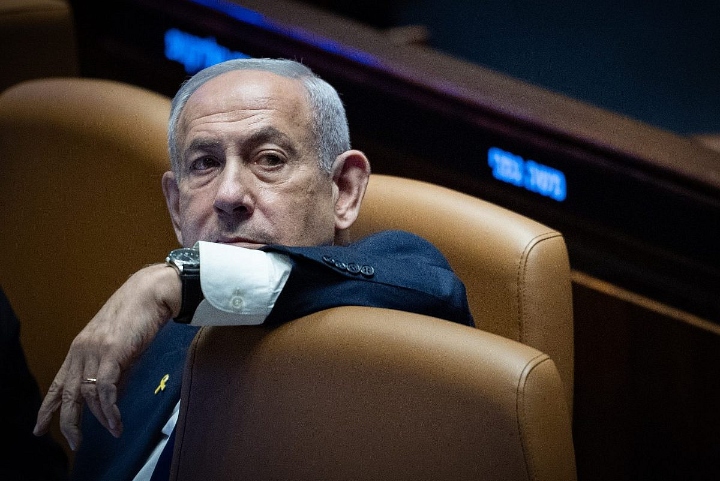
The rumour that Benjamin Netanyahu is dead broke without warning. A single claim, stark and unverified, surged across social media: Benjamin Netanyahu was dead.
Within minutes, X became a torrent. Posts multiplied. Screenshots mimicking news alerts circulated widely.
Anonymous accounts cited unnamed sources, while others expressed their claims with unwarranted certainty. There was no official confirmation—only a cacophony of noise, growing louder by the second.
And in that noise, confusion took hold.
A viral claim, rapidly amplified
The reports were false. That much became clear as established outlets, including France 24 and i24NEWS, moved to verify the claim.
No credible authority confirmed Netanyahu’s death. Israeli officials did not issue any statement suggesting a national emergency. There was, in fact, no incident.
Yet the rumour spread faster than the corrections.
Why this rumour carries weight
Not all falsehoods gain traction. This one did – because of the man at its centre.
Netanyahu remains one of the most consequential figures in global politics. His tenure has spanned decades, marked by conflict, diplomacy, and deep domestic divisions.
His decisions carry regional and international consequences.
So when his supposed death surfaced, it triggered more than curiosity.
It raised immediate questions about leadership, stability, and succession. For a brief moment, a hypothetical scenario began to feel real.
That is the power of high-profile misinformation: it exploits both prominence and uncertainty.
Social media as a force multiplier
The origin of the claim appears rooted in social media, where barriers to publication are minimal and incentives favour engagement over accuracy.
On X, posts were amplified by algorithms that reward visibility, not verification.
Some accounts shared the claim without evidence. Others repackaged it with dramatic language.
A few attempted to question its validity but were quickly drowned out.
The result was an information cascade: repetition created the illusion of confirmation.
تبریک نوروزی نخست وزیر بنیامین نتانیاهو برای مردم ایران
Prime Minister Benjamin Netanyahu’s greetings to the Iranian people on the occasion of Nowruz. pic.twitter.com/fVb0aTvhMZ
— Benjamin Netanyahu – בנימין נתניהו (@netanyahu) March 17, 2026
The cost of delay
In times of crisis, whether genuine or perceived, official silence can lead to misinterpretation. Governments and institutions often proceed with caution, placing a higher value on accuracy than on the speed of their responses.
But in a fast-moving digital environment, that caution can create space for speculation.
In this case, the absence of an immediate, authoritative denial allowed the rumour to circulate widely before being debunked.
By the time clarity emerged, the claim had already reached a global audience.
After much speculation, including assertions that the images and videos of Netanyahu enjoying a cup of coffee were generated by artificial intelligence, a post from the prime minister appeared on his X page on Tuesday, March 17, in which he wished Iranians a joyous festive season.
READ ALSO: Ali Larijani: Israel Says Iran’s Shadow Power Broker Killed in Strike
A familiar pattern, a growing risk
The episode underscores a broader challenge.
What begins as a single post can, within minutes, shape global perception.
Even when corrected, the initial impact lingers, raising doubts, prompting reactions, and eroding trust.
In the end, Netanyahu was not dead. The systems that carried the rumour, however, remain very much alive.
PAY ATTENTION: Reach us at info@gotta.news.