On the afternoon of May 22, 2020, the Kenyan Senate carried the mood of a political execution chamber.
The corridors outside the chamber buzzed with whispers, urgent discussions, and the sharp sound of television cameras being adjusted to capture the unfolding historical moment.
Inside, senators sat stiffly beneath the green-and-gold decor of the House, their faces betraying the tension of a ruling Jubilee Party at war with itself.
The country was deep inside the uncertainty of the Covid-19 pandemic, but that Friday, another contagion had gripped Parliament: fear, loyalty and betrayal colliding in full public view.
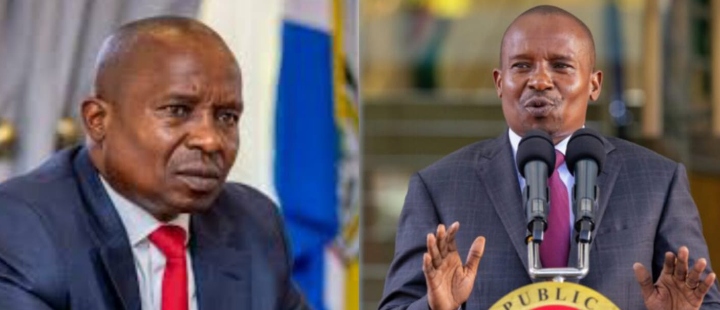
At the centre of it all sat Kithure Kindiki, then the Senate Deputy Speaker and Tharaka Nithi Senator.
By then, the Jubilee Party had fractured into hostile camps aligned either to the Jubilee Party’s party leader Uhuru Kenyatta or his deputy, William Ruto.
Kindiki was widely viewed as sympathetic to Ruto’s camp, and in the brutal arithmetic of power, that alone had become dangerous.
The motion seeking his removal had been tabled by then Senate Majority Chief Whip and now Murang’a Governor Irungu Kang’ata.
Officially, the motion accused Kindiki of failing to promote the Jubilee Party’s agenda in the Senate and of showing disrespect towards President Uhuru Kenyatta.
Unofficially, Nairobi’s political class already understood the real charge: disloyalty to the party leadership orbiting State House.
Party discipline
The debate stretched for hours and often crackled with bitterness. Some senators framed the impeachment as necessary party discipline.
Others described it as punishment for independent thinking.
The National Super Alliance (NASA), under the leadership of Siaya Senator James Orengo, supported the impeachment, asserting that it was essential to mitigate the significant dissent within the ruling Jubilee Party.
The atmosphere alternated between anger and melancholy, as lawmakers rose one after another to either defend or condemn a man many privately admitted they respected.
Yet it was Kindiki’s own speech that transformed the sitting from routine parliamentary combat into political theatre of rare emotional weight.
When his moment came, the chamber noticeably quieted.
Kindiki rose slowly, composed but visibly burdened. He did not shout. He did not lash out.
Instead, he delivered a restrained, almost mournful address that carried the cadence of a man watching the collapse of a political home he had helped build.
He reminded senators that he had served Jubilee faithfully from its earliest days, helping craft its legal and ideological architecture.
He spoke of sacrifice, friendship and the pain of seeing political disagreements mutate into personal destruction.
Elitist triviality
At moments, his voice tightened, but he never lost control of the room.
“I have no bitterness,” Kindiki told senators, describing his impending impeachment as “elitist triviality powered by petty, divisive and vindictive politics.”
The remarks that would later circulate widely online and on television clips.
He insisted he would leave office with dignity intact, declaring that leadership positions were temporary but character endured.
Videos of the speech spread rapidly across Kenyan social media, with many viewers praising his composure under humiliation.
The silence that followed parts of his speech was striking. Even political opponents appeared subdued.
Then came the vote.
One by one, senators declared their positions in a roll-call vote conducted under special Covid-era procedures.
The numbers clearly indicated an overwhelming defeat: 54 senators voted in favour of his removal, while only 7 voted against it.
The threshold required under Article 106 of the Constitution had been comfortably met.
For a brief instant after Speaker Kenneth Lusaka announced the results, the chamber seemed suspended in stillness. Then murmurs broke out across the floor.
Political intolerance
Kindiki remained seated, expression controlled, absorbing the verdict with the stillness of a man who had expected the blow long before it landed.
Outside Parliament, reactions exploded immediately. Supporters of the Ruto faction condemned the impeachment as political intolerance.
Allies of Uhuru Kenyatta defended the impeachment as enforcement of party discipline.
On Facebook, Twitter and YouTube, clips of Kindiki’s speech drew thousands of reactions, many Kenyans describing the moment as one of the most dramatic Senate sessions since the chamber’s creation under the 2010 Constitution.
Ironically, the impeachment that was intended to diminish him would later become one of the defining moments of his political reinvention.
READ ALSO: “Weka Yeye Kamba”: John Methu Lifts Lid on Alleged Raila Betrayal During Gachagua Impeachment
Five years later, after serving as interior cabinet secretary, Kindiki would rise even higher, eventually becoming Kenya’s deputy president following the impeachment of Rigathi Gachagua in 2024.
But on that cold May evening in 2020, none of that future was visible.
There was only the image of a constitutional lawyer standing in the Senate chamber he once presided over, delivering a farewell speech with unusual grace while the political tide swept him out of office.
Support the journalism you love. Become a Gotta Member.
Every Gotta Membership helps fund fearless reporting, in-depth analysis, and the stories that matter most. Purchase anytime, as often as you wish, and help keep independent journalism thriving.
Join Gotta Membership today. Click HERE to check out securely with Paystack. For any enquiry, reach us at info@gotta.news.