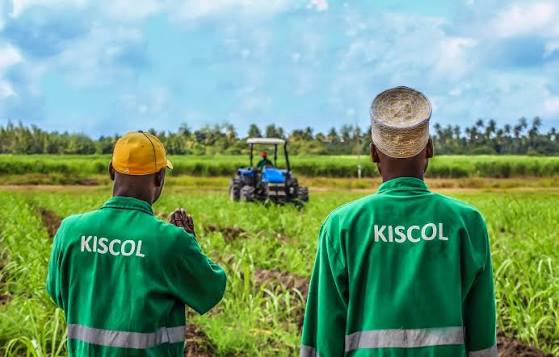
At Ramisi, the red soil of Kwale runs into fields of cane, irrigation channels and the imposing machinery of a factory that was meant to change the fortunes of Kenya’s Coast.
The ambition was always bigger than sugar.
Kwale International Sugar Company Limited (KISCOL) was designed as an integrated agro-industrial complex where cane could produce sugar, bagasse could generate electricity, molasses could feed ethanol production and thousands of farmers could find a dependable market for their crop.
But for years, much of that promise remained trapped by land disputes, operational disruptions, inadequate cane and uncertainty over the future.
Now, Ramisi is moving again.
In July this year, Agriculture Cabinet Secretary Mutahi Kagwe announced a government-led effort to revive KISCOL bringing together the Kenya Sugar Board, national and county governments, investors, farmers, security agencies and local leaders.
The objective is not simply to restart machinery. It is to resolve the problems around the machinery.
Kagwe described KISCOL as “one of the country’s most strategic sugar investments”, citing its modern milling infrastructure, irrigated nucleus estate and large out-grower network.
His argument rests on tangible assets.
A Built Platform
KISCOL, a $400 million (KSh 50 billion) project, has a 5,000-hectare nucleus estate, a mill designed to process about 3,300 tonnes of cane a day and an 18-megawatt bagasse-fired power plant.
Its irrigation and water-management infrastructure was designed to reduce the vulnerability of cane production to unreliable rainfall.
The factory is therefore only one part of the equation.
Around it is an agricultural economy.
Farmers grow cane. Trucks move it. Mechanics maintain equipment. Agro-dealers sell inputs. Engineers keep systems running.
Transporters, retailers and small businesses benefit from the movement of money generated by the crop.
When the factory works, the effects travel far beyond its gates.
That is why the government has placed farmers at the centre of the revival plan.
The government has announced plans to engage eligible cane farmers through a series of meetings to resolve outstanding issues with growers.
The move is meant to encourage production from growers to put more acres under cane buy inputs and wait for harvest.
That is where the economics of revival begins.
The Land Question
Yet KISCOL’s biggest historical problem has never been confined to the factory.
It has been the land beneath it.
The dispute eventually reached the High Court, producing one of the most consequential judgements in the company’s history.
In December 2025, Justice Florence Wangari ordered the Kenyan government to compensate KISCOL after finding that the State had fundamentally breached its obligations under a 2007 land agreement.
At the centre of the case was a 15,000-acre concession intended to provide KISCOL with land for its nucleus estate and factory operations.
The State had undertaken to give the company what the court described as “quiet and peaceful possession” of the leased land.
That did not happen.
Large sections of the concession became occupied by people asserting rights over the land, while the government failed to provide KISCOL with the possession contemplated under the agreement.
Reports on the judgement said the disruption left a substantial portion of the concession unavailable for development.
Another complication followed when part of the land was excised for Base Titanium’s mining operations without KISCOL receiving compensation or alternative land, according to reports on the judgement.
The court found that these failures undermined the company’s ability to develop its estate and contributed to operational and financial difficulties.
The KSh24 billion award was consequently more than a dispute over acreage.
It was a judgement about the consequences of a government failing to deliver part of the bargain on which a major private investment had been built.
That has implications beyond KISCOL.
For investors, land is not merely a physical asset. It is a question of certainty.
If a government grants land for an industrial project, the reliability of that commitment becomes part of the investment itself.
The case also illustrates the difficult reality of large projects in Kenya, where commercial investment, historical land claims and community interests can collide.
Any revival therefore has to deal with both sides of that equation: investor certainty and legitimate community concerns.
A Market Waiting
There is also a straightforward economic reason for taking KISCOL seriously.
Kenya remains a substantial sugar market.
The 2026 Economic Survey recorded domestic sugar production of about 613,200 tonnes in 2025, while imports stood at approximately 477,700 tonnes.
Those figures reveal a persistent gap between what Kenya produces and what its market consumes.
The government says production has since risen sharply.
In July, it reported monthly output of about 89,000 tonnes, compared with approximately 82,000 tonnes in monthly consumption, and announced a halt to sugar imports.
Whether that improvement can be sustained remains to be seen.
But the underlying demand is not in doubt.
Kenya has millions of consumers, food manufacturers, wholesalers and retailers already buying and selling sugar.
KISCOL would therefore not be entering a market that needs to be created.
Its challenge is different: produce competitively and consistently enough to capture part of that demand.
And this is where the existing investment becomes important.
A new investor would normally have to assemble land, irrigation, a factory, power infrastructure and a farmer-supply network before worrying about production.
KISCOL already has much of that foundation.
The question is whether the pieces can now be made to work together reliably.
More Than Sugar
That question becomes even more interesting when the factory is viewed as an industrial system rather than simply a sugar mill.
Bagasse can generate electricity. Molasses can support ethanol production. Irrigated cane can improve production reliability.
Processing creates demand for transport, engineering, packaging and logistics.
Kagwe has specifically pointed to value addition around molasses, ethanol and bagasse-based electricity generation, suggesting that the government’s vision for KISCOL extends beyond conventional sugar production.
The distinction between existing capacity and future potential matters.
Not every proposed revenue stream automatically becomes a profitable business.
It requires capital, markets, technology, reliable production and competent management.
But the model itself is sound in principle. One crop can feed several economic activities.
That is the industrial logic KISCOL brings to Kenya’s sugar debate.
Instead of asking only how many tonnes of sugar a factory can produce, the more useful question is how much economic value can be extracted from every tonne of cane.
What Happens Next
Kagwe has tried to frame the revival around people rather than machinery.
“This visit is not about politics. It is about the lives and livelihoods of the people of Kwale. A factory is only important because of the people whose lives it transforms,” he said during his inspection of the factory and surrounding operations.
He has also pointed to cooperation as the route forward.
“When Government, investors and communities work together, factories reopen, production increases and farmers begin earning again. Kwale can achieve the same success,” Kagwe said.
All said and done, the harder work begins with implementation.
Land questions must be settled. Farmers must be paid predictably. Cane supply must match milling capacity.
Irrigation infrastructure must be protected. Security must improve. Financing must be credible.
And the responsibilities of government, investors, farmers and the county must be clear.
Kagwe says the revival framework will address irrigation, cane development, factory operations, financing and long-term sustainability, with transparency and accountability at its centre.
The test will be whether those principles survive contact with reality.
Because Ramisi does not need another promise. It needs continuity.
The factory exists. The fields exist. The irrigation exists. The market exists. The farmers exist.
For Kwale, the stakes are immediate.
A functioning KISCOL means a market for cane, work for transporters, business for traders, income for households and a stronger industrial base along the Coast.
For Kenya, the stakes are larger.
The country is trying to produce more of its own sugar, reduce import dependence and attract private capital into productive sectors.
KISCOL sits directly inside that ambition.
PAY ATTENTION: Reach us at info@gotta.news.