The Court of Appeal has dealt another blow to suspects linked to the multi-billion-shilling National Youth Service (NYS) scandal, upholding the forfeiture of more than KSh22.4 million and USD105,293 held by Lilian Wanja Muthoni Mbogo, her companies and her children.
In a unanimous ruling, the judges concluded the money was more likely than not the proceeds of crime, dismissing explanations that it came from farming, foreign consultancy work, and legitimate investments as unsupported by credible evidence.
The decision cements the Assets Recovery Agency’s power to seize suspected illicit wealth even where criminal prosecutions fail or never end in convictions.
Cash Trail
In a judgment delivered on July 31,2026 Court of Appeal judges Patrick Kiage, Lydia Achode and Aggrey Muchelule dismissed Mbogo’s appeal and upheld a 2020 High Court decision by then Justice Mumbi Ngugi ordering the forfeiture of the funds.
The money, KSh22,445,487.74 and USD105,293.70, was held in ten accounts belonging to Lillian Mbogo, her businesses Sahara Consultants, Lidi Holdings Limited, Lidi Estates Limited, and three of her children.
The accounts were maintained at Equity Bank and Diamond Trust Bank.
The dispute traces back to the second NYS scandal that erupted in 2018 after investigators alleged nearly KSh468 million had been siphoned from the youth agency through suppliers who paid for goods and services allegedly never delivered.
Mbogo was among suppliers charged following investigations by the Directorate of Criminal Investigations.
Separately, the Assets Recovery Agency (ARA) launched civil proceedings under the Proceeds of Crime and Anti-Money Laundering Act (POCAMLA) to recover money suspected to be linked to the alleged fraud.
Unlike criminal trials, civil forfeiture proceedings require proof only on a balance of probabilities rather than beyond reasonable doubt.
Money Pattern
Investigators told the court they uncovered a banking pattern that raised serious money laundering concerns.
Between 2016 and 2018, the accounts received repeated large cash deposits in both Kenyan shillings and US dollars; the same period investigators said NYS funds were being looted.
Many deposits were deliberately kept below KSh1 million, the threshold that triggers enhanced reporting obligations under Kenya’s anti-money laundering regime.
The judges noted that on August 24, 2017, separate deposits of KSh900,000 were made into several accounts.
The following day brought another series of KSh900,000 deposits together with a USD10,000 cash payment into another account.
To the court, those were not isolated transactions but part of a sustained pattern consistent with structuring deposits to evade financial reporting requirements.
Defence Fails
Mbogo maintained that every shilling had a lawful source.
She said the money came from a commercial farming venture in Uyoma, Siaya County, her husband’s consultancy work in South Sudan through Nile International Limited, her salary as a public servant; and proceeds from property investments and loans.
But investigators challenged each explanation.
When they visited the alleged commercial farm, they reported finding no large-scale agricultural enterprise.
Instead, they found family land, shrubs, and a small greenhouse belonging to Mbogo’s brother-in-law containing young tomato plants meant for subsistence farming.
The judges accepted that evidence, concluding there was no commercial operation capable of generating millions of shillings in cash.

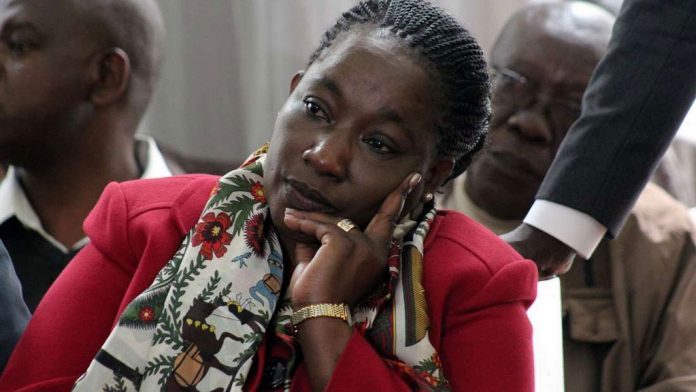
Lilian Mbogo.Photo/courtesy
The receipts Mbogo produced also failed to convince the court.
Many were years older than the investigation period, some lacked dates altogether, and those falling within the relevant years totalled only about KSh390,000, a tiny fraction of the money investigators sought to recover.
Her tax records proved equally damaging.
The Kenya Revenue Authority records produced in court showed employment income but no farming income between 2015 and 2018, undermining her claim that agriculture generated the substantial deposits.
Investigators also examined Nile International’s bank records and found no deposits during the years under investigation, contradicting claims that consultancy earnings financed the disputed accounts.
“We do not find it plausible that the significant cash deposits were derived from the alleged farming business,” the judges said, describing the supposed enterprise as “non-existent or a mere phantom.”
Major Precedent
Mbogo also argued that the Assets Recovery Agency lacked legal standing because only its director, not the agency itself, could institute forfeiture proceedings.
She further contended that criminal charges against her had since been withdrawn, meaning the money could no longer be treated as proceeds of crime.
The Court of Appeal rejected both arguments.
It held that any defect in naming the agency instead of its director was purely procedural and caused no prejudice.
More significantly, the judges reaffirmed that civil forfeiture is legally independent from criminal prosecutions.
Relying on the Supreme Court’s recent decision in Ethics and Anti-Corruption Commission & Another v Aboo (2026), the court held that authorities need only establish a credible link between property and criminal activity.
Once that burden is met, the property owner must provide a convincing lawful explanation.
The withdrawal of criminal charges, the judges said, did not shield the money from forfeiture because POCAMLA expressly separates civil recovery from criminal proceedings.
READ ALSO: Three Kenyans Lose Six Vehicles in Major Asset Recovery Case Over Drug Money Trail
Reviewing the evidence, the bench concluded the Assets Recovery Agency had successfully demonstrated that the funds were proceeds of crime, while Mbogo had failed to offer a credible alternative explanation.
In one of the judgement’s most memorable lines, the court summed up its reasoning with a simple observation: “Nothing comes out of nothing.”
The appeal was dismissed with costs, ending more than six years of litigation over the frozen accounts and further strengthening the Assets Recovery Agency’s hand in pursuing wealth suspected to have been acquired through corruption.
PAY ATTENTION: Reach us at info@gotta.news.