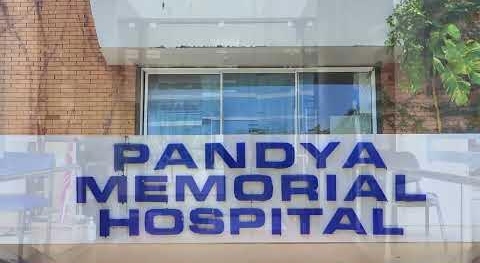
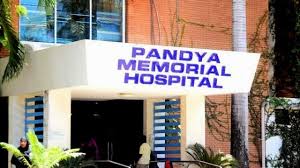
A 17-year legal battle has ended with Pandya Memorial Hospital blamed for a critical delay that the High Court found led to the loss of a young girl’s arm.
For Uchi Mwidhin Mwarua, the ordeal began in August 2008, when she was barely three years old.
She had been taken to Pandya Memorial Hospital after developing a problem in her left arm.
Instead, the medical crisis that changed her life unfolded in her right arm.
Seventeen years later, Justice Ngaah Jairus has ordered Pandya Memorial Society Registered Trustees to pay Mwarua KSh6.03 million, holding the hospital entirely liable for negligence.
The judgement was delivered at the High Court in Mombasa on August 14, 2026.
The court, however, cleared two doctors sued alongside the hospital. Dr Awadh Hemed and consultant paediatrician Dr Rajab M. Karega were both found not liable.
The ruling is striking because the court did not ultimately find that either doctor caused the original vascular injury.
Instead, it focused on what happened after the child’s right arm began showing serious warning signs.
The Wrong Turn
Mwarua had been referred from the Kenya Ports Authority Clinic to Pandya on August 7, 2008. Her initial problem involved her left arm.
Dr Karega diagnosed cellulitis and possible septic arthritis around the left elbow. Treatment was started, including antibiotics.
An intravenous line was then placed in her right wrist, the unaffected arm.
Soon afterwards, Mwarua developed severe pain and swelling around the intravenous site. Her family later said the child’s condition deteriorated rapidly.
The limb eventually developed severe vascular compromise and gangrene.
She was transferred to Kenyatta National Hospital, where doctors amputated her right forearm below the elbow on August 21, 2008.
The loss was permanent. Medical evidence placed her permanent incapacity at 50 per cent.
Mwarua’s case initially centred on the allegation that Dr Hemed had accidentally inserted the intravenous line into an artery.
Her medical expert, Dr James Kabora Mogire, supported that theory.
But the defence presented a different explanation. Vascular surgeon Dr Peter Aseyo Sore questioned whether arterial cannulation had occurred.
He pointed instead to possible drug leakage, thrombosis, chemical thrombophlebitis or compartment syndrome.
The judge found the evidence insufficient to establish precisely what caused the initial vascular injury.
He also rejected the suggestion that using the right arm was itself negligent. The left arm was already swollen and infected, making the right arm a reasonable site for intravenous access.
That finding ultimately cleared Dr Hemed.
Dr Karega also survived the negligence claim.
The judge found that his initial treatment was reasonable. Once he became aware of the vascular problem, he recognised it as an emergency and ordered investigations.
He eventually pushed for an emergency transfer to KNH as the child’s condition deteriorated.
The court found that his conduct was consistent with the standard expected of a reasonably competent paediatrician.
Seven Lost Hours
The hospital, however, could not escape responsibility.
Its own records provided the strongest evidence against it.
At about 8pm on August 8, a night nurse was told that Mwarua was suffering severe pain around the intravenous site.
The nurse removed the cannula.
The hospital’s records then stated that a resident medical officer was supposed to attend and insert another cannula.
But the doctor never came.
No doctor examined the child’s arm.
Even more troubling, Dr Karega was not informed about the severe pain or cannula removal.
The child was left to sleep.
For about seven hours, there was no recorded assessment of the arm’s colour, warmth, circulation, capillary refill, or movement.
Then came the critical warning.
At 3.20am, Mwarua’s mother raised the alarm because her daughter’s fingers could no longer move. The hand had also become cold.
When Dr Karega examined her at about 4.30am, the hand was swollen, cyanotic and poorly perfused.
The judge found this failure of monitoring and escalation constituted negligence.
The significance was simple but devastating: the child’s condition had changed dramatically while nobody medically qualified had properly assessed her.
The court found that the hospital’s failure allowed the threatened vascular problem to progress into irreversible damage.
Justice Ngaah concluded that the delay caused or materially contributed to the amputation.
A Long Legal Fight
The case itself has had almost as dramatic a journey as the medical dispute.
Mwarua filed the original suit on September 24, 2009, while still a minor.
Two years later, Dr Karega attempted to have the claim against him struck out.
That application exposed an extraordinary development.
In March 2009, Mwarua’s father had accepted a KSh500,000 ex-gratia payment from Karega. In return, he signed an agreement declaring that the doctor was not responsible for the child’s injuries.
The agreement also purported to prevent future claims against the paediatrician.
Justice Hannah Okwengu refused to strike out the case in 2011. She held that questions surrounding an agreement affecting a minor’s rights required proper examination.
The litigation later stalled and was eventually dismissed for want of prosecution.
In April 2023, the High Court revived the matter and ordered changes concerning the child’s representation. The court noted that the case had already consumed many years despite the seriousness of the injury.
By the time the final hearing concluded, Mwarua had become an adult.
The Final Bill
Justice Ngaah awarded Mwarua KSh4.5 million for pain, suffering, and loss of amenities.
The amount included compensation for losing her dominant right forearm.
The judge emphasised her extremely young age, the prolonged pain before amputation, and the fact that she would live virtually her entire life with the disability.
The court awarded another KSh1.5 million for loss of earning capacity.
It found that losing a dominant forearm created a substantial disadvantage in the labour market throughout her working life.
A further KSh34,620 was allowed as strictly proved special damages, bringing the total to KSh6,034,620.
Claims for future medical expenses and future earnings were rejected because they were insufficiently pleaded or proved.
Interest on special damages runs from September 24, 2009, while interest on general damages runs from the judgement date.
READ ALSO: ‘Pesa Kwanza’: Hospital Delay That Cost Gospel Singer Betty Bayo Her Life
Pandya must also pay Mwarua’s legal costs.
In an unusual final twist, the hospital must pay the taxed costs of Dr Hemed and Dr Karega, whom the court cleared.
The judgement ultimately turns on one powerful lesson: medical negligence can arise not only from what doctors do but also from what a hospital fails to do when warning signs emerge.
For Mwarua, those missed hours ended with the loss of an arm.
For Pandya Memorial, they have ended with a KSh6 million judgement, interest, and substantial legal costs.
PAY ATTENTION: Reach us at info@gotta.news.