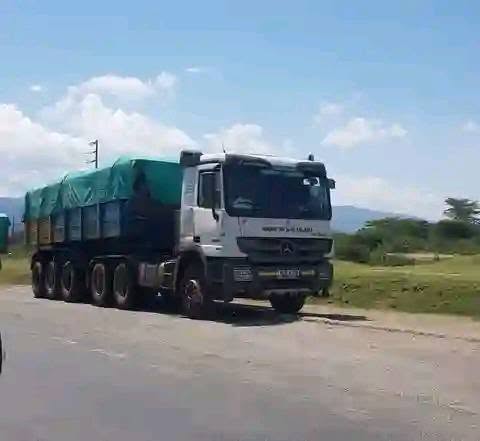
The High Court has cut by more than half the compensation payable to the family of a cyclist killed beneath a commercial trailer, ruling that a magistrate relied on speculation instead of evidence when assigning blame for the fatal collision.
In a judgement delivered on July 17, Justice Ngaah Jairus partly allowed an appeal by Anwarali & Brothers Company Ltd, reducing the company’s liability from 70 per cent to 50 per cent.
The court also slashed the award for loss of dependency, leaving the deceased’s estate entitled to KSh1,008,504, instead of a substantially higher sum awarded by the lower court.
At the heart of the appeal lay a difficult legal question. How should courts determine liability when nobody can reliably explain how a fatal road accident unfolded?
Justice Jairus answered that question by insisting courts cannot bridge evidentiary gaps through assumptions, however compelling the tragedy appears.
“A trial court is not entitled to fill an evidential gap left by a party who has failed to discharge the burden the law places upon that party by constructing its own hypothesis of events,” the judge ruled.
Devastating Collision
The case arose from a devastating collision on May 17, 2021, along the busy Mombasa-Malindi Road near the Kengeleni matatu stage.
Geofrey Zebedi, a 25-year-old cleaner, died instantly after coming into contact with the company’s truck and trailer while riding his bicycle.
His father, David Masinde Otieno, later sued as administrator of his son’s estate, accusing the company’s driver of speeding, veering from his lane, and driving negligently.
During the trial, however, the family’s case encountered a critical obstacle.
The father admitted he never witnessed the collision and could not identify who caused it.
The police officer who testified had not investigated the accident personally and conceded he lacked the police file while remaining unsure how the collision actually occurred.
An intended eyewitness never testified after reportedly relocating abroad.
The company’s driver painted a very different picture. He testified that heavy traffic had just been released by a police officer controlling the junction.
Travelling at about 20 kilometres per hour, he heard members of the public shouting before discovering the cyclist trapped beneath the trailer’s rear axle.
According to bystanders, the cyclist had attempted to avoid a matatu entering the stage before losing control and sliding underneath the trailer.
NTSA Inspection Certificate
The defence also produced an NTSA inspection certificate completed on the accident day.
It found no pre-accident mechanical defects, undermining allegations that the truck had been defective or poorly maintained.
Those competing narratives became decisive on appeal.
Justice Jairus observed that while the driver’s account remained largely unchallenged during cross-examination, it also suffered an important weakness.
The driver admitted he never actually saw the cyclist before impact, meaning his explanation depended largely upon what unnamed bystanders allegedly told him.
That left the court confronting what the judge described as a genuine evidentiary vacuum.
Instead of accepting either version completely, the judge turned to the long-established English authority of Baker v Market Harborough Industrial Co-operative Society Ltd.
The precedent holds that where an accident undeniably occurred but reliable evidence cannot establish whose negligence predominated, liability may fairly be shared equally.
“The evidence does not permit this Court to say in what proportion each contributed to the collision,” Justice Jairus concluded before substituting the magistrate’s 70:30 finding with equal responsibility between both sides.
The judgement also delivered an important reminder about the burden of proof in civil litigation.
Although negligence may sometimes be inferred through surrounding circumstances, the court stressed that a claimant must still establish facts making negligence more probable than not.
The mere occurrence of a fatal accident, the judge said, cannot automatically translate into legal liability.
The High Court was equally critical of the trial court’s reasoning. The magistrate had reconstructed the accident by suggesting the cyclist “must have” been riding too close to the truck.
Justice Jairus found that approach legally unsustainable because judges must decide cases on evidence rather than speculation.
50:50 Liability
Having reconsidered liability, the court next turned to damages.
It upheld awards of KSh30,000 for pain and suffering and KSh100,000 for loss of expectation of life.
However, it significantly reduced compensation for loss of dependency after finding insufficient evidence that the deceased substantially supported his family.
The deceased’s payslip showed a net monthly income of KSh16,323, while evidence established he contributed only KSh3,000 monthly to his parents.
His siblings were all adults capable of supporting themselves.
Those facts, the judge ruled, justified reducing the dependency ratio from two-thirds to one-third.
The court nevertheless upheld KSh320,000 in special damages, rejecting arguments that funeral receipts were inadmissible because they lacked stamp duty.
Ordinary commercial receipts, the judge held, are not instruments requiring stamping under Kenya’s Stamp Duty Act.
READ ALSO: Lavington Security Guards Lose Appeal as Court Upholds KSh840,740 Award to Sacked Guard
After recalculating damages, the court assessed total compensation at KSh2,017,008 before contribution.
Applying the revised 50:50 liability split left the estate entitled to KSh1,008,504 from Anwarali & Brothers Company Ltd.
Each party will bear its own costs of the appeal, while the respondent retains costs awarded in the lower court.
PAY ATTENTION: Reach us at info@gotta.news.