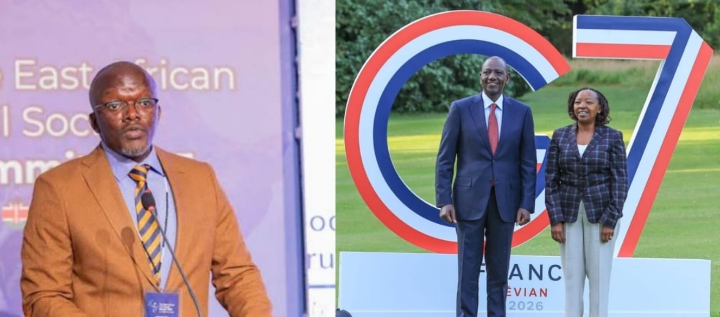
Nairobi lawyer Evans Ogada has accused President William Ruto of abandoning African solidarity in pursuit of Western approval.
Speaking on Citizen TV on Wednesday, June 17, Ogada argued that Kenya’s participation in the G7 Summit reflects a troubling diplomatic shift that could undermine regional interests and East African Community (EAC) commitments.
“You cannot go as William Ruto to negotiate on things that may impact our regional commitments in EAC,” Ogada said.
“He parades himself as the articulator of Kenya’s foreign policy. The evidence out there shows a president and a policy pivoting towards the West.”
His remarks come as images of Ruto rubbing shoulders with leaders of the world’s richest democracies continue to dominate headlines and social media.
To supporters, the invitation signals Kenya’s growing strategic importance on the global stage.
To critics, however, it raises uncomfortable questions about who ultimately benefits from the country’s increasingly visible role in international diplomacy.
Ogada was unsparing in his assessment.
“Look at how we have been voting and acting internationally,” he said.
“Today we go this way; tomorrow we go that way. It is all about transactions that are not making tangible, meaningful sense for Kenya.”
But it was his comments on South Africa that sparked the sharpest reaction.
READ ALSO: Godwin Murunga: Historian Dismisses Ruto G7 Hype, Says Invitation Serves Western Interests
According to Ogada, Kenya’s invitation came against the backdrop of mounting tensions between South Africa and some Western powers following Pretoria’s genocide case against Israel at the International Court of Justice (ICJ).
“Why is Kenya, for example, at the G7? Because South Africa was sacrificed,” he argued.
“Why was South Africa sacrificed? Because South Africa dared to take some people to the ICJ.”
Then came the stinging conclusion.
“And so we are, in effect, dancing on the blood of a fellow African country.”
The remarks have added fuel to an already heated debate over whether Kenya’s growing proximity to Western powers represents diplomatic success or a departure from Africa’s traditional posture of collective solidarity.
Support the journalism you love. Become a Gotta Member.
Every Gotta Membership helps fund fearless reporting, in-depth analysis, and the stories that matter most. Purchase anytime, as often as you wish, and help keep independent journalism thriving.
Join Gotta Membership today. Click HERE to check out securely with Paystack. For any enquiry, reach us at info@gotta.news.