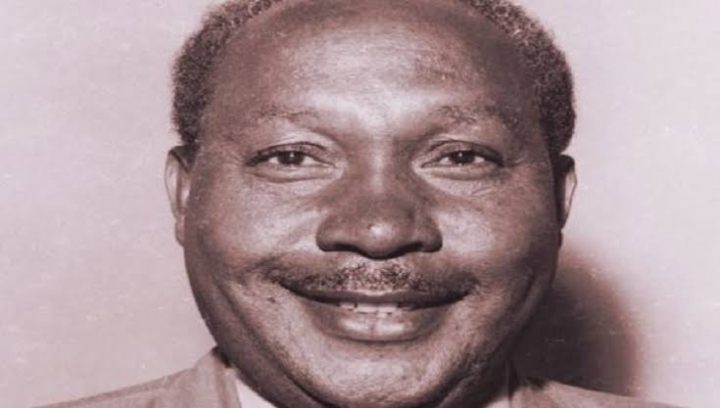
After decades of litigation over wives, children, and billions, the Supreme Court dismissed George Kihara Mbiyu’s bid for another appeal, leaving intact the Court of Appeal’s recognition of Margaret Njeri Mbiyu and Eddah Wanjiru Mbiyu as Koinange’s wives.
For nearly four decades, the Koinange family fought over one sprawling inheritance.
The battle began after former Cabinet Minister Peter Mbiyu Koinange died intestate.
He died on September 3, 1981, leaving behind property and a complicated family structure.
What followed was a succession fight involving wives, children, land, and inheritance rights.
The dispute eventually travelled through the High Court and Court of Appeal.
It finally reached the Supreme Court through an application filed by George Kihara Mbiyu.
But the Supreme Court did not conduct another succession trial or redistribute the estate.
Instead, it dismissed George’s attempt to secure another appeal on September 28, 2018.
That decision left the Court of Appeal’s earlier findings standing.
The Family Dispute
The heart of the dispute was surprisingly personal before it became deeply legal.
The family first had to establish who Koinange’s wives actually were.
The first two houses belonged to Loise Njeri Mbiyu and Rith Damaris Wambui Mbiyu.
Their children were recognised as beneficiaries, and their status was not seriously contested.
The controversy centred on Margaret Njeri Mbiyu and Eddah Wanjiru Mbiyu.
George Kihara Mbiyu challenged their recognition as Koinange’s wives and beneficiaries.
The dispute also involved Eddah’s daughter, Sylvia Wambui Mbiyu.
Sylvia had been born about 83 days after Koinange’s death.
Her biological connection to Koinange consequently became another contested succession question.
The estate itself added another layer of complexity to the family fight.
Some property had been sold to two companies during Koinange’s lifetime.
The courts therefore had to consider those companies’ interests alongside family claims.
They also had to determine how the estate should ultimately be shared.
The First Reversal
The original succession case was filed in Nairobi as Succession Cause No. 527 of 1981.
It remained unresolved for more than three decades before reaching a substantive judgement.
Justice Musyoka finally delivered his judgement on September 25, 2015.
His findings initially appeared to settle the dispute against Margaret and Eddah.
The judge found that neither woman was Koinange’s wife under the evidence presented.
That finding meant they could not inherit as surviving spouses from his estate.
He also found that Sylvia was not Koinange’s biological daughter.
But that was not the end of the story.
Margaret, Eddah and other parties pursued appeals against the High Court decision.
The Court of Appeal subsequently re-evaluated the evidence and reached a different conclusion.
It held that Koinange had four wives, rather than the two initially recognised.
That finding changed the inheritance equation significantly.
Margaret and Eddah were consequently recognised as wives and beneficiaries of Koinange’s estate.
George then sought to take the dispute to Kenya’s highest court.
The Supreme Court Bid
George first sought certification from the Court of Appeal to pursue another appeal.
He argued that his intended appeal raised a matter of general public importance.
The Court of Appeal rejected that application on April 27, 2018.
George then moved to the Supreme Court, challenging that refusal.
His application raised two principal legal complaints against the appellate court’s reasoning.
The first concerned estoppel under Section 120 of the Evidence Act.
George objected to affidavits sworn after Koinange’s death concerning the disputed wives.
He argued that those affidavits could not properly establish their status as widows.
His second complaint concerned res judicata and earlier interlocutory proceedings.
George argued that interim decisions could not override evidence presented during the main trial.
He therefore wanted the Supreme Court to scrutinise the Court of Appeal’s reasoning.
Before examining those arguments, however, the Supreme Court addressed its jurisdiction.
Could it review the Court of Appeal’s refusal to grant certification?
The Supreme Court answered yes under Article 163(5) of the Constitution.
That meant George was entitled to have the certification refusal reviewed.
But jurisdiction to review the decision did not guarantee another appeal.
The Door Closes
The Supreme Court then examined whether George had met the required constitutional threshold.
It found that he had not demonstrated a matter of general public importance.
On estoppel, the judges accepted that the disputed affidavits came after Koinange’s death.
However, their contents concerned events that occurred during Koinange’s lifetime.
The timing of the affidavits therefore did not invalidate the evidence they contained.
The Supreme Court consequently found no new legal principle requiring its intervention.
It also rejected George’s res judicata argument concerning interlocutory proceedings.
The court noted that res judicata can apply to decisions made on applications.
The doctrine is therefore not limited to final judgements after full trials.
But the most important finding concerned the proposed appeal’s wider significance.
The judges found that the disputed issues arose from the particular facts.
They did not consider those issues capable of significantly affecting the wider public.
The court therefore found no matter of general public importance warranting another appeal.
On September 28, 2018, the Supreme Court dismissed George’s application.
That decision had a precise legal consequence.
The Supreme Court did not overturn the Court of Appeal’s four-wife finding.
It also did not reopen the evidence surrounding Margaret and Eddah’s status.
The Court of Appeal’s recognition of the two women therefore remained undisturbed.
The temporary stay of the succession proceedings also lapsed after dismissal.
Because the dispute involved family members, each party was ordered to bear costs.
The distinction matters because the Supreme Court did not finally end every dispute surrounding Koinange’s estate.
It closed George’s particular route to another Supreme Court appeal.
The underlying succession saga, meanwhile, continued through other proceedings.
That is what makes the 2018 ruling significant.
READ ALSO: Supreme Court Ends Johmat’s 22-Year Fight to Recover Interest on KSh14 Million Frozen by CBK
After decades of litigation, the Supreme Court effectively said the dispute could not return.
The Court of Appeal had already made its determination on the disputed wives.
George had failed to establish a constitutional basis for taking that determination further.
For Margaret and Eddah, the Court of Appeal’s recognition consequently remained intact.
For George, the Supreme Court door closed on that particular appeal.
And for the Koinange family, the extraordinary inheritance battle continued beyond that courtroom.
PAY ATTENTION: Reach us at info@gotta.news.