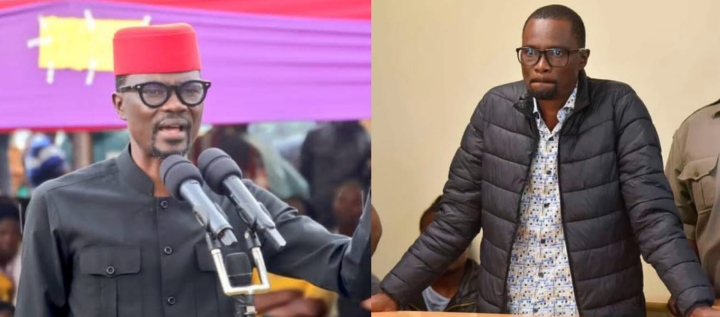
A red-capped Didmus Barasa walks into Kibra on November 7, 2019, during one of the most combustible by-elections in recent memory.
The Kimilili MP is there to campaign for Jubilee candidate McDonald Mariga. The political temperature is already near boiling point.
Then comes the encounter.
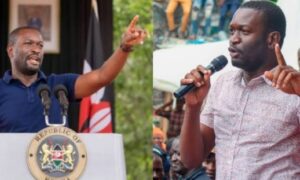
Then Dagoretti North MP Simba Arati spots him and casually, almost playfully, asks whether he has come looking for trouble.
The warning is clear: if you keep talking trash, you might get chased away.
For perhaps the first time in a long while, Barasa appears to realise he is operating on hostile ground.
“We’re friends,” he says nervously.
Then comes the line that would outlive the confrontation itself.
“We’re kolliks.”
The thick Bukusu-accented pronunciation instantly becomes political folklore.
Moments later, the mood turns ugly.
A hostile crowd engulfs him. His trademark red cap vanishes into the chaos. Hands fly. Shoves rain down from every direction.
The politician known for political punches suddenly finds himself absorbing them.
The footage remains one of the most enduring images of modern Kenyan politics.
A more recent video is equally symbolic.
Barasa is once again being pushed and jostled amid a political confrontation.
Ukiskia Simba Arati akiongea huwezi jua he is such a goon, Didmus Barasa knows 😭 pic.twitter.com/aIrnUpByAw
— Limo (@Limorio_) October 19, 2025
Yet, as always, he returns to the arena moments later, microphone in hand and defiance intact, ready for another verbal duel.
If Kenyan politics were a boxing ring, Didmus Wekesa Barasa would be the fighter who absorbs punishment, stumbles into the ropes, wipes blood from his lip, and somehow emerges talking louder than before.
The Governorship Dream
Now he wants the biggest political prize in Bungoma County.
This year, the sharp-tongued Kimilili MP formally declared his bid for the Bungoma governorship, positioning himself in direct competition with seasoned political heavyweights and ambitious county kingpins.
Yet Barasa’s journey to this point reads less like a conventional political biography and more like a political thriller.
Before Parliament. Before the headlines. Before the red cap became his political trademark.
There was the military.
For years, Barasa styled himself as “Captain (Rtd)”, projecting the image of a former military officer turned politician.
But in 2021, the Ethics and Anti-Corruption Commission challenged that narrative, stating that he had never attained the rank of captain during his service in the Kenyan Defence Forces.
Records cited by the commission indicate that Barasa served in the Kenya Air Force between October 28, 2007, and February 26, 2009, leaving the military at the rank of Private.
The agency further stated that he had been dismissed on disciplinary grounds, including absenteeism and gross misconduct.
For most politicians, such a revelation would have been politically crippling.
For Barasa, it became merely another chapter.
Fraud and Murder Allegations
Then came the fraud allegations.
In 2020, Barasa was charged with allegedly obtaining KSh 450,000 from a buyer by claiming he could sell him a Toyota Hiace, registration number KBX 734E.
Prosecutors alleged the vehicle remained under financing arrangements with Uwezo Microfinance Bank.
The charges stemmed from events said to have occurred on March 10, 2017, in Kitengela.
Yet even those legal troubles failed to halt his political ascent.
Then came the case that threatened to overshadow everything else.
August 9, 2022. Kenya was voting.
At Chebukwabi Polling Station in Kimilili Constituency, tensions erupted between Barasa and his rival, Brian Khaemba.
What followed became one of the most dramatic election-day incidents in recent Kenyan history.
Authorities alleged that Brian Olunga, an aide to Khaemba, was shot during the confrontation. Barasa was subsequently charged with murder.
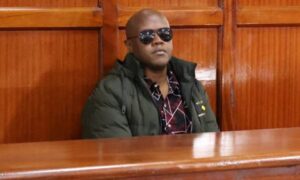
The image was devastating: a victorious MP-elect appearing in court to answer a murder charge while the nation watched.
For nearly two years, the case hung over his political future like a storm cloud.
Then, in 2024, the High Court in Bungoma acquitted him. Justice Rose Ougo ruled that the prosecution had failed to produce sufficient evidence to sustain a conviction.
Barasa walked free. By then, controversy had become almost inseparable from his political brand.
A Walking Political Storm
His list of feuds reads like a directory of Kenyan politics.
Following the November 2019 Kibra by-election violence, Barasa publicly accused ODM figures, including Simba Arati and Fatuma Gedi, of orchestrating the attack against him.
In a tweet that perfectly captured his combative style and appetite for controversy, he sarcastically invited applications from 500 people to join his team, joking that applicants with certificates of good conduct would be automatically disqualified.
Back home in Bungoma, his political relationships have been equally turbulent.
He has alternated between alliances and rivalries with leaders such as Governor Kenneth Lusaka, National Assembly Speaker Moses Wetang’ula, Sirisia MP John Waluke, and former Governor Wycliffe Wangamati.
With Barasa, political friendships often have the shelf life of campaign posters.
Allies become rivals. Rivals become allies. Then the cycle begins again.
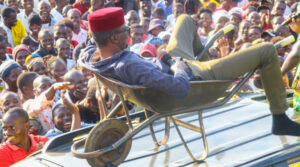
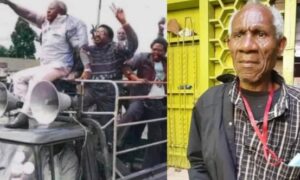
Didmus Barasa at a past political rally. Photo/courtesy
Even recently, he has accused former allies of attempting to sabotage his gubernatorial ambitions.
Meanwhile, legal and ethical questions continue to shadow him.
Last year, the EACC summoned him over allegations linked to an undisclosed bribery investigation involving a transaction said to have occurred on December 13, 2023.
Barasa rejected the allegations and challenged the commission’s actions, insisting the matter involved a private financial dispute.
Uniquely Didmus Barasa
Then there are the moments that make him uniquely Didmus Barasa.
Like his recent habit of dramatically leaving with mourners before funeral programmes have concluded, transforming solemn village gatherings into political theatre and leaving both supporters and critics wondering whether they have witnessed political genius or political excess.
Perhaps that duality explains his enduring appeal.
To supporters, Barasa is fearless, accessible, and unapologetically authentic.
To critics, he is combustible, provocative, and perpetually attracted to controversy.
Either way, he remains impossible to ignore.
Today, as endorsements trickle in from church leaders, community groups, and local political networks, Barasa is positioning himself as the man who will inherit Bungoma after Governor Kenneth Lusaka’s departure.
The irony is difficult to miss. A former soldier whose military credentials were questioned.
A politician who has battled fraud allegations. A lawmaker who stood trial for murder and walked free.
A man who has been chased, shoved, heckled, and hauled before courts. Now he seeks to govern nearly two million people.
To the idealist, that may sound improbable. In the extraordinary story of Didmus Barasa, it sounds almost inevitable.
Support the journalism you love. Become a Gotta Member.
Every Gotta Membership helps fund fearless reporting, in-depth analysis, and the stories that matter most. Purchase anytime, as often as you wish, and help keep independent journalism thriving.
Join Gotta Membership today. Click HERE to check out securely with Paystack. For any enquiry, reach us at info@gotta.news.