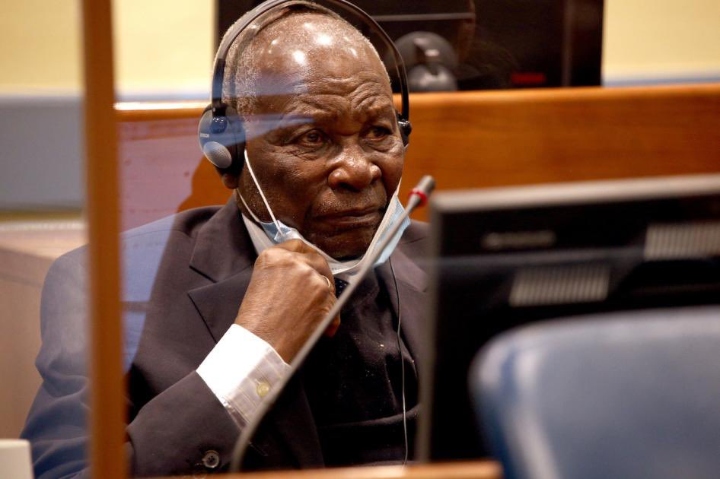
Félicien Kabuga, one of the world’s most wanted genocide suspects and the man accused of financing the 1994 Rwanda genocide, is dead. He was 93.
The UN tribunal handling his case confirmed Kabuga died while receiving medical care on Saturday, May 16, bringing an end to a decades-long pursuit that spanned several countries and captivated genocide investigators for years.
He was accused of playing a central role in the mass killings that left more than 800,000 people dead in just 100 days, most of them ethnic Tutsis and moderate Hutus.
Prosecutors alleged that the wealthy businessman used his fortune to fund Hutu extremist militias and bankroll the notorious Radio Télévision Libre des Mille Collines (RTLM), whose broadcasts urged attackers to target Tutsis during the genocide.
The killings began after the plane carrying then-Rwandan president Juvénal Habyarimana was shot down on 6 April 1994.
Dark period
What followed was one of the darkest episodes in modern African history.
Militias erected roadblocks across Kigali and other towns. Armed groups moved from village to village carrying rifles, clubs and machetes. Families were slaughtered in churches, schools and homes as the country descended into chaos.
Breaking news
Kabuga Felicien is dead pic.twitter.com/rtT8JZ3q3h
— Dr. Dash (@dr_dash250) May 16, 2026
Kabuga denied all charges against him, including genocide, incitement to commit genocide and crimes against humanity.
After the genocide, he disappeared.
For more than two decades, he managed to evade arrest despite a $5m (£3.7m) reward offered for information leading to his capture. Investigators believed he moved between several African and European countries using false identities and a network of loyal associates.
At various times, reports placed him in Kenya, the Democratic Republic of Congo, Switzerland and Belgium.
Arrested
He was eventually arrested in May 2020 in a suburb outside Paris. Where French authorities found him living quietly under a false name in a modest apartment.
His arrest shocked many investigators who had spent years tracking him.
Kabuga was later transferred to a UN detention facility in The Hague to face trial. However, proceedings were repeatedly delayed as his health deteriorated.
Medical experts later diagnosed him with dementia and Alzheimer’s disease. In 2023, judges ruled that he was no longer mentally fit to participate meaningfully in court proceedings, effectively halting the trial.
READ ALSO: Saif al-Islam: Muammar Gaddafi’s Son Shot Dead in Masked Dawn Attack
His final years were spent in legal limbo inside the UN detention system.
No final verdict was ever delivered in the case, meaning one of the last major unresolved prosecutions linked to the Rwanda genocide ends without a judicial conclusion.
PAY ATTENTION: Reach us at info@gotta.news.