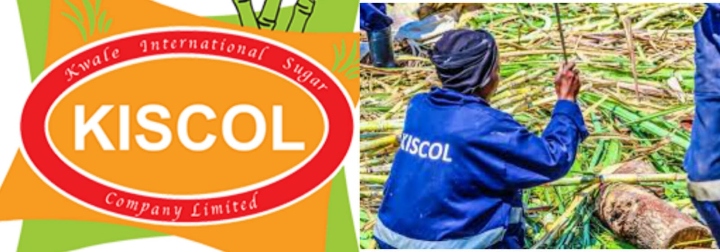
Editor’s Note: Our senior staff writer, Getty Soila, examines the decline of one of Kenya’s most ambitious agro-industrial projects, which has succumbed to rust, litigation, and an overwhelming KSh 24 billion burden on taxpayers.
In this deeply reported piece, she probes whether KISCOL collapsed through circumstance or whether the system itself made failure more profitable than success.
The rust arrives quietly in Ramisi in Kwale County. It settles on abandoned steel, creeps across silent conveyor belts and hangs heavily in the salty air drifting inland from the Indian Ocean.
The sprawling fields of Kwale International Sugar Company Limited (KISCOL) still look like the skeleton of a grand industrial dream: giant irrigation pipes, cane fields stretching toward the horizon and a factory complex that once promised to transform Kenya’s coast.
But today, the place feels less like a functioning sugar zone and more like the remains of an unfinished empire.
And now, after the High Court ordered the Kenyan government in 2025 to pay the Mauritius-backed investor about KSh 24 billion for breach of contract, a far more uncomfortable question has emerged:
Was KISCOL ever truly meant to succeed as a sugar project, or did it eventually become more valuable as a legal battle than as a factory?
That question now shadows one of the most expensive commercial rulings in Kenya’s recent history.
KISCOL entered Kenya in 2006 after securing a long-term lease over nearly 15,000 acres in the historic Ramisi sugar belt in Kwale County.
The project was backed by the powerful Pabari Group, a family-owned conglomerate with deep business interests across East Africa.
Among the prominent directors associated with the venture were businessman Harshil Kotecha and industrialist Kaushik Pabari, figures who helped market the project as a bold new era for Kenya’s sugar industry.
At launch, the promises were enormous.
The company envisioned a $300 million (KSh 50 billion at the time) agro-industrial complex featuring a sugar mill capable of crushing 3,300 tonnes daily, an 18-megawatt power plant and ethanol production facilities.
Politicians in typical fashion hailed it as the rebirth of coastal sugar farming. Investors called it a model of modern African industrialisation. Thousands of locals expected jobs, contracts and prosperity.
But almost immediately, the dream collided with Kenya’s oldest political wound: land.
A mega-project built on contested ground
The court later found that the government failed to guarantee KISCOL “quiet and peaceful possession” of the land it had leased to the company.
Squatters occupied sections of the property. Families asserted ancestral ownership claims. Parts of the concession overlapped with mining interests linked to Base Titanium.
The disputes slowed operations, disrupted financing and gradually destabilised the project.
Legally, the ruling is relatively clear: the Kenyan state breached contractual obligations owed to the investor.
But economically and politically, the story is far murkier.
Because KISCOL entered one of Kenya’s most historically contested land regions, fully aware that land disputes at the coast are never simple.
In Kwale, land is tied to generations of unresolved grievances, displacement claims and bitter battles over ownership.
Yet the company proceeded with a mega-project that depended on extraordinary political stability and state protection.
That decision now sits at the centre of the controversy.
Across Africa, similar mega-agricultural projects have repeatedly collapsed under the same pressures: contested land rights, elite capture, political patronage and debt exposure.
In Mozambique, the ambitious ProSavana corridor project ran into fierce resistance from communities who argued ancestral land had been handed away without meaningful consultation.
Sierra Leone’s Addax Bioenergy sugar project promised green energy and rural transformation before financial instability and local tensions triggered painful restructuring.
Ethiopia’s vast state-backed sugar expansion drive under the late Meles Zenawi consumed billions before becoming synonymous with delays, debt and bureaucratic overreach.
KISCOL increasingly resembles that familiar African story: a mega-project dazzling in promise but fragile in foundation.

The Pabari Group directors: Rajesh Pabari, Kaushik Pabari and Harshil Kotecha. Photo/courtesy
When litigation becomes more profitable than production
Nowhere is that fragility more visible than in the size of the court award itself.
The KSh 24 billion payout reportedly includes sunk investment, refinancing costs, penalties and projected commercial losses.
But critics argue the case exposes a deeper problem in Africa’s development model: corporate losses are protected with precision while local suffering becomes invisible.
Thousands of outgrower farmers planted cane expecting the factory to anchor a thriving regional economy. Many borrowed heavily to expand production. Then harvesting cycles stalled. Payments delayed. Cane dried in the fields. Debts mounted. Some reportedly lost land after defaulting on loans.
Yet those losses never became billion-shilling headlines.
Only the investor’s losses did.
That imbalance has fuelled anger in Kwale, where farmers are now demanding that at least KSh 4 billion from the compensation award be reserved for workers and outgrowers devastated by the collapse.
The contradictions surrounding KISCOL have only deepened public suspicion.
Even as the company secured a massive judgement against the state, it has also been battling insolvency proceedings linked to an alleged KSh 700 million debt owed to EPCO Builders — the contractor behind the factory construction.
Kenya’s Supreme Court recently allowed the insolvency case to proceed to trial.
The contrast is striking.
On one hand, KISCOL is a legally wronged investor owed billions by taxpayers. On the other, it faces claims from creditors alleging financial distress and unpaid obligations.
The project now appears trapped between two identities: victim and liability.
Critics argue that once land disputes escalated and operational stability collapsed, the incentives changed.
Success through sugar production became uncertain. Success through litigation became possible. That is the aspect now deeply unsettling many legal and economic analysts.
Because if failed mega-projects on contested land can generate enormous compensation awards, then development itself risks becoming distorted.
READ ALSO: Kenya Didn’t Fail – Its Politics Failed It
Risk stops being something investors avoid. It becomes something they can potentially monetise.
Meanwhile, back in Ramisi, the factory still stands.
The cane still grows.
But the dream that once surrounded KISCOL has curdled into something colder: a warning about what happens when development becomes easier to litigate than to deliver.
PAY ATTENTION: Reach us at info@gotta.news