In the dimly lit strategy rooms of State House, where maps of Kenya are marked not by geography but by votes, alliances and betrayals, a new campaign doctrine is taking shape – one that reflects both confidence and quiet anxiety.
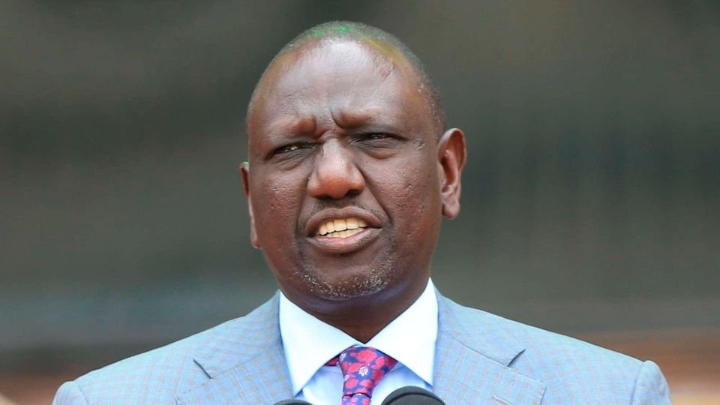
President William Ruto’s re-election blueprint, codenamed WSRB27 (William Ruto Beyond 2027), is emerging as one of the most expensive and calculated political operations in Kenya’s history.
At its heart lies a staggering figure: KSh100 billion – a war chest designed to tilt the scales of the 2027 election in three decisive battlegrounds – Mt Kenya, Ukambani and Western Kenya.
Yet behind the money is something more telling: a recognition that the rules of the game have changed – and that victory can no longer be improvised.
A president confronting a new electoral reality
Since the landmark nullification of the 2017 presidential election by the Supreme Court under David Maraga, Kenya’s electoral terrain has fundamentally shifted.
“The election ends at the polling station,” Maraga ruling famously asserted, words that continue to echo through Kenya’s political class.
For Ruto, a master tactician who built his 2022 victory on grassroots mobilisation and razor-thin margins, the implications are clear.
READ ALSO: Why It’s Next to Impossible for Ruto or Anyone to Rig the 2027 Elections
The era of opaque vote manipulation has narrowed dramatically. Smartphones, live streams, and parallel tallying systems have turned every polling station into a public square.
A source close to the presidency and who spoke to Gotta News on condition of anonymity captures this shift bluntly:
“It is now extremely difficult to manipulate results. Real-time digital scrutiny means any irregularity is instantly exposed.”
In this environment, the battle for 2027 is not about post-election arithmetic – it is about pre-election dominance.
The numbers that matter
Kenya’s electoral map is increasingly shaped by factors such as population density and the efficiency of voter turnout.
According to recent voter trends and projections tied to the Independent Electoral and Boundaries Commission register:
- Mt Kenya region: projected to exceed 8 million voters
- Western Kenya (Luhya vote): approximately 4–5 million voters
READ ALSO: WATCH: Governor Lelelit Dodges Arrest in Parliament, Then Dares Sifuna for ‘Man-to-Man’ Duel
- Ukambani (Kamba vote): about 2–3 million voters
Together, these blocs could represent a significant portion, exceeding 50%, of the crucial vote in a closely contested election.
Mt Kenya, in particular, remains the crown jewel, with high turnout, disciplined voting patterns, and a history of swinging elections.
“The consensus is simple,” the source explains.
“If we secure just over 50% of Mt Kenya, we can win – even if the margin is narrow.”
The KSh 100 billion strategy
The WSRB27 plan is not merely about campaign rallies or media messaging. It is a full-spectrum political investment strategy.
According to insiders, the funds will be deployed across several fronts:
- Political realignments
A significant portion of the war chest is earmarked for recruiting influence:
- Sitting MPs
- Retired political heavyweights
READ ALSO: ODM Power Struggle Explodes as Ndolo Claims Sifuna Camp Holds Party Certificate
- Regional kingpins and opinion leaders
The going rate? Between KSh10 million and KSh100 million per individual.
“This is not new,” the source says matter-of-factly.
“Politics in Kenya has always involved strategic alignments. The 2018 handshake and the 2022 campaigns were built on billions.”
- Ground mobilisation
Campaign logistics remain brutally expensive:
- A single high-voltage rally: up to KSh 80 million
- County-wide mobilisation tours: hundreds of millions
- Grassroots networks: sustained funding over months
- Data and strategy
Behind the scenes, economists and strategists, including David Ndii and Deputy President Kithure Kindiki, are anticipated to provide guidance on the campaign’s numerical modelling.
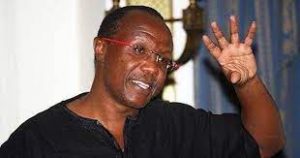
David Ndii. Photo/courtesy
Ndii, in particular, is valued for his predictive accuracy.
“He understands the numbers better than most. That’s critical in a race this tight.” Revealed our source.
Mt Kenya: the epicentre of the battle
No region looms larger in Ruto’s calculations than Mt Kenya – and no region appears more volatile.
Once a solid stronghold for him, the region has now become the epicentre of a burgeoning political rebellion spearheaded by his former deputy, Rigathi Gachagua.
Gachagua has sharpened his rhetoric in recent months, positioning himself as the defender of Mt Kenya’s political and economic interests.
In rally after rally, his message is blunt:
“The mountain will not be dictated to. It will decide its own destiny.”
This rebellion threatens to fracture Ruto’s 2022 coalition from within.
The WSRB27 response is equally blunt: flood the region with resources, influence, and relentless engagement.
Western Kenya: the swing giant
If Mt Kenya is the crown, Western Kenya is the kingmaker.
The Luhya vote, diverse, fragmented, but numerically powerful, has historically resisted bloc voting.
But signs of consolidation are emerging, driven partly by dissatisfaction with the current administration.
Meanwhile, Ruto’s camp is banking on established allies like National Assembly Speaker Moses Wetangula, who commands significant influence among the Bukusu.
“The Bukusu alone account for nearly 40% of the Luhya vote,” the source notes.
Still, concerns persist, particularly in Kakamega, Vihiga and Trans Nzoia, where opposition sentiment is reportedly rising.
Ukambani: the Kalonzo factor
In Ukambani, politics remain deeply personal – and deeply predictable.
For over two decades, the region has largely followed the direction of Kalonzo Musyoka.
That reality poses a strategic dilemma for WSRB27:
- Option 1: Bring Kalonzo into the fold
- Option 2: Undermine his influence by co-opting regional leaders.
“The truth is, Kamba voters listen to Kalonzo,” the source admits.
“If he remains in opposition, it becomes a serious challenge.”
The opposition: fragmented but forming
While Ruto’s campaign machinery gears up, the opposition is coalescing into a formidable, if still undefined, force.
Key figures include:
- Rigathi Gachagua
- Kalonzo Musyoka
READ ALSO: “This Country Cannot Be Helped”: Sifuna’s Words and the Painful Truth Facing Kenya
- Fred Matiang’i
- David Maraga
- Edwin Sifuna
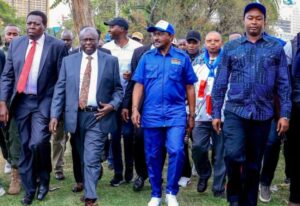
United opposition leaders. Photo/courtesy
The former president, Uhuru Kenyatta, seems eager to ally with the opposition, with Matiang’i as his preferred candidate.
The opposition has yet to settle on a single presidential candidate, but their messaging is increasingly coordinated – and increasingly sharp.
Gachagua, in particular, has framed the 2027 election as a referendum:
“This will not just be an election – it will be a correction of the mistake made in 2022 by electing Ruto.”
The absence of a unified candidate may be temporary. But the momentum is real.
Beyond the battlegrounds
WSRB27 is not confined to the three key regions.
Luo Nyanza and North Eastern Kenya
Ruto’s team is cautiously optimistic.
“Development projects have resonated. The regions may surprise many. North Eastern Kenya is particularly happy with Ruto’s presidency.”
There is also a strategic bet on historic Luo-Kikuyu tensions shaping voting patterns.
Coast region
The president’s camp sees opportunity in demographic shifts:
- Luo voters: estimated 40% in Mombasa County
- Potential to influence gubernatorial and parliamentary races
The president’s re-election team is also optimistic that the region that has been traditionally an ODM stronghold will back the incumbent in 2027.
Rift Valley
Here, Ruto expects near-total loyalty.
“The region will back him to the last vote,” the source asserts.
The high cost of power
If the figures surrounding WSRB27 seem extraordinary, they are not without precedent.
Kenyan elections have long been expensive affairs:
- MP campaigns: KSh30 million–KSh50 million
READ ALSO: From Rivals to Warm Embrace: Uhuru, Gachagua Surprise Kenya at Karaba Burial
- Presidential campaigns: running into tens of billions
What sets 2027 apart is the scale – and the stakes.
“This is a high-stakes election,” the source says.
“Both sides will spend heavily. That is the reality.”
The unspoken risk
Yet money alone cannot guarantee victory.
There is a lingering question – one whispered in political circles:
What if voters take the money and vote differently?
The source dismisses this concern as naïve.
“It is not that simple. A strong war chest is the first step to winning.”
Still, history offers cautionary tales. Voters are increasingly unpredictable, influenced as much by sentiment as by structure.
PAY ATTENTION: Reach us at info@gotta.news