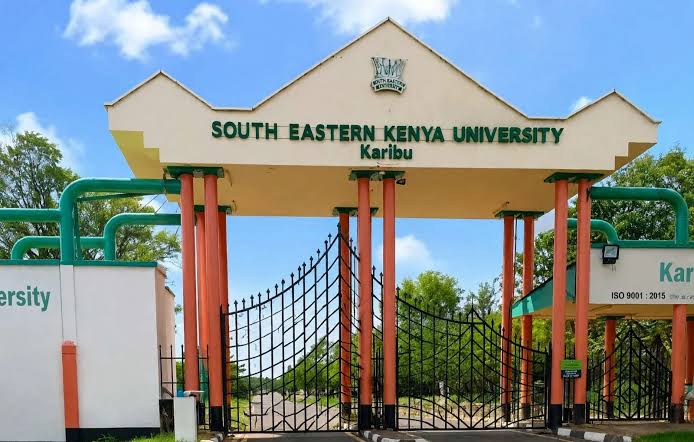
High Court overturns SEKU courtroom victory after finding that a magistrate ignored contractual dispute-resolution clauses. But the contractor leaves without a payment award, with its KSh4.3 million claim still unresolved.
The High Court has overturned South Eastern Kenya University’s (SEKU) victory in a KSh4.3 million construction dispute.
However, the contractor pursuing the money has yet to secure payment.
In a judgement delivered on November 20, 2026, Justice John Chigiti allowed an appeal by Geokarma Construction Limited.
The judge overturned a February 28, 2025 judgement that had dismissed the contractor’s entire claim.
But the victory came with an important qualification. Rather than ordering SEKU to pay, the court struck out the original suit.
Justice Chigiti found that the magistrate had entertained proceedings without jurisdiction.
The parties had contractually agreed to resolve disagreements through alternative dispute resolution before arbitration.
The decision effectively resets a dispute that has occupied the parties for years.
It also highlights the consequences of overlooking dispute-resolution clauses in commercial contracts.
The Dispute
The disagreement dates back to January 2013, when SEKU awarded Geokarma a construction contract.
The KSh42,365,027 agreement covered sports facilities and associated civil works.
The project was situated at the university’s main campus in Kitui County.
The parties signed the agreement on January 23, 2013, under tender number SEUCO/Proc/005/2012/2013.
The contract established a payment system based on certificates issued by the Project Manager.
Clause 23 required the university to honour certified payments within 30 days.
Another provision, Clause 23.3, addressed interest arising from delayed payments.
It prescribed three percentage points above the prevailing Central Bank average base lending rate.
Geokarma maintained that it completed the works and handed over the facilities.
SEKU subsequently occupied and used the facilities without complaints about their quality.
However, disagreements emerged over outstanding payments, retention money and additional works.
The contractor eventually sued, demanding KSh4,312,026.92.
The claim included KSh121,227.60 in outstanding second-moiety retention.
Another KSh759,624 represented the unpaid balance under Payment Certificate No. 9.
Geokarma also demanded KSh1,547,268.15 under Certificate No. 10.
The remaining KSh1,883,907.17 represented interest on delayed payments under Certificate No. 11.
Procurement Row
SEKU opposed the claim, arguing that additional works lacked proper written procurement approval.
The university maintained that the arrangements violated public procurement legislation.
It argued that an illegal procurement arrangement could not create enforceable payment obligations.
Consequently, SEKU maintained that Geokarma could not obtain judicial enforcement.
Geokarma disputed that argument, accusing the university of introducing procurement irregularities without pleading them.
It also faulted the magistrate for overlooking payment certificates issued by the appointed Project Manager.
The contractor further challenged reliance on an earlier High Court decision. It cited Centurion Engineers & Builders Ltd v Kenya Bureau of Standards.
The High Court’s 2016 decision in that dispute was subsequently overturned in 2023.
The Court of Appeal described the procurement defence as a “mere afterthought aimed at avoiding liability”.
It also recognised the contractor’s entitlement to payment for completed additional works.
Geokarma argued that the same reasoning should apply to its dispute.
However, Justice Chigiti ultimately did not determine these procurement arguments.
The jurisdictional question proved decisive, effectively preventing examination of the payment dispute.
Contract Clauses
The turning point emerged when the judge examined the agreement’s dispute-resolution provisions.
Clauses 37 and 38 established procedures that both parties had accepted.
Clause 37.1 required parties to notify each other before initiating arbitration.
They also had to agree on an arbitrator within 30 days.
Clause 37.2 covered disagreements involving contractual interpretation, payment certificates and project valuations.
Importantly, Clause 38 imposed another requirement before arbitration could commence.
The parties first had to pursue alternative dispute resolution.
The contract specifically identified reconciliation, mediation and adjudication as available mechanisms.
Justice Chigiti found these provisions binding on both contracting parties.
Geokarma could not rely on payment provisions while overlooking the agreed dispute-resolution framework.
The judge cited Ndiara Enterprises Ltd v Nairobi City County Government [2018] eKLR.
That decision emphasised exhausting established dispute-resolution procedures before approaching courts.
The court also considered the Supreme Court’s decision in Albert Chaurembo Mumba v Maurice Munyao [2019] eKLR.
The Supreme Court emphasised judicial restraint where alternative dispute-resolution mechanisms already existed.
Justice Chigiti found no exceptional circumstances justifying departure from the contractual procedures.
Neither had Geokarma sought an exemption from those requirements.
Fatal Oversight
Interestingly, the judge agreed with Geokarma on one important complaint. The magistrate had failed to examine the contract governing the parties’ relationship.
Justice Chigiti observed that the February 2025 judgement never properly addressed its contractual provisions.
Had the magistrate examined the agreement, the jurisdictional problem would have become apparent.
The judge described that omission as a “fundamental error that vitiates the entire judgement”.
Justice Chigiti also revisited the magistrate’s earlier determination of jurisdiction.
As a first appellate court, the High Court retained responsibility for independently examining the proceedings.
The judge invoked the celebrated Owners of Motor Vessel Lilian S v Caltex Oil [1989] KLR 1 decision. It established that “Jurisdiction is everything. Without it, a Court has no power to make one more step.”
Consequently, the magistrate should have stopped proceedings immediately upon identifying the jurisdictional obstacle.
Instead, the court proceeded to determine substantive issues without jurisdiction.
The High Court therefore declared the entire proceedings and resulting decree unlawful.
In its final orders, Justice Chigiti allowed the appeal and set aside the magistrate’s judgement.
The judge also struck out Kitui Chief Magistrate’s Court Civil Suit No. 411 of 2018.
Each party was directed to bear its own costs of the appeal. The judgement was delivered at Eldoret on November 20, 2026.
READ ALSO: Mama Ngina Kenyatta Link at Heart of KSh90 Million Ruiru Land Battle
For contractors and public institutions, the decision offers an important contractual lesson.
Dispute-resolution clauses are not decorative provisions that parties can casually disregard.
For Geokarma, however, the immediate challenge remains securing a determination on outstanding payments.
Its successful appeal has removed an adverse judgement without resolving the underlying financial dispute.
The contractor has won the jurisdictional battle, but its KSh4.3 million payment battle remains unfinished.
PAY ATTENTION: Reach us at info@gotta.news.