Editor’s note: Kepha Okerio from Kisii discusses what has kept the country grounded over 60 years after Kenya gained independence.
Kenya should have taken off by now. It has the geography. The human capital. The institutions. The ambition. Few African countries entered independence with such promise. Yet more than 60 years later, the ascent remains hesitant.
The reason is no longer mysterious. Kenya’s delay is not economic. It is political.
Development has been hindered by the state of the political landscape itself, its ingrained habits, incentives, and unresolved contradictions.
A system struggling with integrity
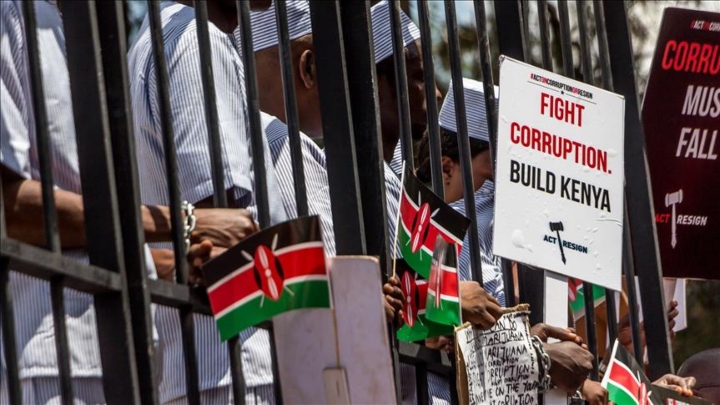
Corruption remains the most visible ailment.
It is no longer episodic or shocking. It is systemic. Public resources often fail to reach their intended targets. Oversight mechanisms exist, but enforcement is inconsistent. Accountability is selective.
The consequences are practical, not abstract. Corruption raises the cost of doing business. It weakens public trust. It deters long-term investment.
When citizens perceive the state as extractive rather than developmental, compliance erodes.
Growth depends on trust. And trust, once broken, is expensive to rebuild.
Politics of identity, not ideas
Kenya’s political competition continues to be predominantly influenced by identity rather than policy.
Elections tend to resemble ethnic censuses rather than contests of ideas. Alliances matter more than platforms. Power is bargained, not earned through performance.
Devolution was meant to disrupt this logic. In important ways, it has brought services closer to the people.
But it has also replicated patronage networks at the county level. In many cases, power changed location, not character.
The result is fragmented governance. National priorities are filtered through local political calculations. Long-term planning becomes difficult. Policy continuity suffers.
A nation cannot progress decisively when its political landscape is in a constant state of negotiation.
Institutions without full autonomy
Kenya’s constitutional architecture is strong on paper.
Independent commissions, a reformed judiciary, and a bicameral legislature were designed to constrain executive power. In practice, institutions often struggle to assert independence under political pressure.
This weakens the rule of law. Predictability declines. Development, which thrives on consistency and confidence, becomes fragile.
Selective accountability sends a clear signal: rules apply unevenly. For investors and citizens alike, that uncertainty is costly.
Debt without productivity
Fiscal policy has become another constraint. Kenya has relied heavily on borrowing to sustain growth.
Debt has financed infrastructure and recurrent expenditure, but productivity has not kept pace. As debt service costs rise, development spending is squeezed.
This creates a familiar cycle in which resources that could support industrialisation, innovation, and job creation are instead diverted to servicing existing obligations. While infrastructure expands, economic ecosystems continue to lag behind.
Borrowing can accelerate growth. Borrowing without productivity delays it.
Land: the unfinished business
Historical factors continue to weigh heavily, none more so than land.
Colonial patterns of dispossession were never fully addressed after independence. Land ownership remained concentrated, generating disputes and long-standing grievances.
Unclear or contested land rights discourage long-term investment, particularly in agriculture. They also continue to shape political mobilisation and social cohesion.
Development requires stability at its foundation. Land insecurity undermines that stability.
Uneven growth, uneven opportunity
Economic growth in Kenya has been geographically uneven.
Urban centres have progressed at a much faster pace than rural and peripheral regions, leading to significant disparities in access to infrastructure, markets, and opportunities. These inequalities remain stark.
When growth is spatially concentrated, national demand remains limited. Social tensions rise. Human capital is underutilised. A country cannot fully develop when large segments of its population remain excluded from progress.
Circulation matters. Prosperity must move.
A culture of impunity
Underlying these challenges is a governance culture that struggles to enforce consequences.
Leaders associated with mismanagement or corruption often return to public office.
Accountability processes exist, but outcomes are rare. Sanctions are delayed or diluted.
Public faith in democratic institutions weakens. Citizens respond through protest, disengagement, or the quiet exit of talent. None of these responses supports sustained development.
READ ALSO: Netizens Share Hilarious ways Kenyan Officials Demand Bribes
Cautious optimism
Yet Kenya is not without strengths. Its democratic space, though strained, remains open. Civil society is active. The population is young, informed, and increasingly assertive. Institutions, while imperfect, still exist and can be strengthened.
What is required is political resolve. Resolve to prioritise competence over patronage. Also, resolve to enforce rules consistently. Resolve to invest in productivity rather than symbolism. Resolve to treat public office as stewardship, not entitlement.
Nations rarely fail because they lack ideas. They falter when discipline is absent.
Kenya’s take-off has been delayed, not denied. The runway remains open. Whether the country finally leaves the ground will depend on the choices its leaders and citizens are prepared to make.
The opinions expressed in this article are solely those of the writer and do not necessarily reflect the position of GOTTA.news. We welcome writers to give their views on various social and political issues. Send your opinion to info@gotta.news.