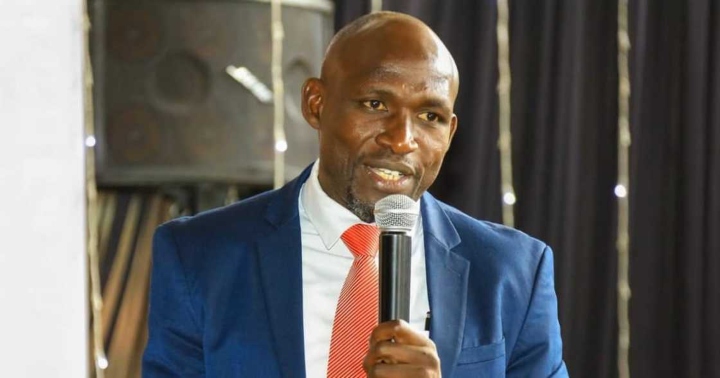
Justice Onesmus Makau upheld Dr Fredrick Onyango Ogola’s dismissal after finding he secretly pursued an executive appointment in Congo and breached university media rules. However, Strathmore must pay him KSh4.65 million in unpaid employment benefits, plus costs and interest.
Strathmore University has successfully defended its decision to dismiss a senior lecturer over two controversial incidents.
However, the institution must pay him KSh4.65 million in outstanding employment benefits.
The Employment and Labour Relations Court found that Dr Fredrick Onyango Ogola committed serious misconduct.
Justice Onesmus Makau ruled that the university established valid grounds and followed fair disciplinary procedures.
In a judgement delivered on November 26, 2026, the judge identified two breaches.
Ogola had pursued an external appointment in the Democratic Republic of Congo without approval.
He also invited journalists to cover a university event without obtaining authorisation.
The incidents unfolded in August 2022, eventually triggering disciplinary proceedings and dismissal.
Ogola subsequently challenged the decision, accusing the university of unfair labour practices.
Congo Appointment
The dispute began after Strathmore discovered a LinkedIn announcement in August 2022.
The post indicated that Ogola had become Executive Dean at AGES Business School, Kinshasa.
The university subsequently constituted an investigative committee on August 26, 2022.
During questioning, Ogola denied securing the appointment and disputed AGES Business School’s existence.
He further claimed his LinkedIn account had been compromised.
However, investigators discovered that AGES had also published the appointment on its website.
The university additionally cited photographs showing Ogola attending activities in Kinshasa.
It also pointed to his attempts to secure leave from Strathmore.
Ogola maintained that AGES had approached him for consultancy services, not employment.
He further argued that the institution was not registered and never formally appointed him.
But Justice Makau found that the evidence established an external engagement.
Whether consultancy or employment, the engagement required prior written approval.
Clause 3.16 of the university’s People and Culture Policy Manual governed external appointments.
It required academic staff to obtain approval before undertaking such engagements.
The judge found that Ogola breached this requirement and another provision.
Clause 3.20 prohibited external commitments that interfered with university responsibilities.
More damagingly, the court found that Ogola had been dishonest during investigations.
Justice Makau noted that he had denied AGES Business School’s existence.
He had also alleged that his LinkedIn account was compromised. The judge found sufficient evidence to reject those explanations.
Media Breach
The second allegation arose during a university event on August 28, 2022.
Ogola had invited journalists to cover the Doing Business in Africa Programme opening dinner.
Strathmore accused him of arranging the coverage without management’s permission.
It further alleged that inaccurate information appeared without internal communications review.
According to the university, management discovered the journalists during the event.
The Head of Department subsequently requested recordings for review before publication.
Ogola allegedly failed to provide the recordings as requested. He maintained that the university’s request came too late.
He also argued that the Director of Graduate Programmes knew about the journalists.
Additionally, he produced correspondence from Kenya Broadcasting Corporation supporting his defence.
He maintained that broadcasters did not ordinarily submit recordings for external review.
The judge, however, considered the university’s express media policy decisive.
Clause 3.9(a) prohibited employees from engaging media without written consent. Such permission had to come from the Vice-Chancellor.
Justice Makau noted that Ogola admitted inviting journalists to the event.
Information about the university was subsequently recorded and published without written consent.
“The bottom line is that he acknowledged that he invited the media,” the judge observed.
The court consequently found that Ogola had breached the institution’s communication policy.
Dismissal Upheld
The university issued Ogola with a show-cause letter on October 28, 2022.
He responded on November 14, denying the allegations against him.
A disciplinary hearing initially scheduled for January 23, 2023, was postponed.
It eventually proceeded on February 13, with Ogola accompanied by Dr James Boyd McFie.
The disciplinary committee considered their representations before recommending termination.
Strathmore communicated its decision through a letter dated April 6, 2023.
Ogola appealed, but the Appeals Committee upheld the dismissal. The university communicated that decision through a letter dated June 7, 2023.
In court, Ogola argued that the disciplinary process was fundamentally flawed.
He accused management of predetermining his dismissal and disregarding defence evidence.
He also challenged the disciplinary committee’s composition and administrative arrangements.
Specifically, he argued that the Director of Human Resources should have served as secretary.
Strathmore countered that its 2013 disciplinary manual had been superseded.
It maintained that the applicable instrument was its March 16, 2022, policy manual.
Justice Makau agreed that the 2022 policy governed the proceedings.
He recognised employers’ managerial prerogative to review workplace policies.
The judge also found that Ogola received the allegations and responded.
He attended the disciplinary hearing alongside his chosen colleague.
The court consequently found compliance with Section 41 of the Employment Act.
It also cited the Court of Appeal decision in Postal Corporation of Kenya v Andrew K. Tanui [2019] eKLR.
The decision identifies four essential elements of a fair disciplinary process.
These include explaining allegations, allowing representation and considering the employee’s defence.
Justice Makau concluded that Strathmore satisfied these requirements.
He therefore upheld the dismissal as substantively and procedurally fair.
KSh4.65 Million
Despite upholding the dismissal, the judge found outstanding employment entitlements.
Strathmore had admitted to owing Ogola several benefits accumulated during employment.
The court awarded KSh351,540 as one month’s salary instead of notice.
His contract provided for one month’s notice, not the three months claimed.
It also awarded KSh70,308 in salary arrears for April 2023.
Accrued leave attracted another KSh632,772, covering January 2022 through April 2023.
The judge further awarded KSh344,690 in gratuity for 2012–2014. Ogola had joined the university’s Staff Provident Fund in 2014.
The largest award concerned unpaid working hours and teaching programmes.
Strathmore admitted owing KSh3,259,350, which the judge awarded in full.
Ogola had sought KSh6 million for additional working hours.
He argued that his teaching responsibilities exceeded the contractual annual workload.
However, the court adopted the amount admitted by the university. The resulting award brought his total entitlements to KSh4,658,660.
Justice Makau rejected several other substantial claims advanced by Ogola.
These included KSh4.5 million for unused sabbatical leave and KSh4.09 million for accumulated annual leave.
The university’s policy expressly provided for forfeiture of unused sabbatical leave.
The judge therefore rejected his claim for the accumulated entitlement.
He also dismissed KSh780,000 sought for psychiatric treatment and reputational damage.
Ogola had provided insufficient medical evidence establishing the alleged harm.
Another dispute concerned materials stored in his official university email account.
Ogola accused Strathmore of sabotaging his career by blocking access.
He claimed the account contained 12 years of teaching notes and research materials.
It also allegedly held consultancy tools, projects, publications and book manuscripts.
The judge declined to determine the intellectual property dispute, pending elsewhere.
However, he observed that employer-issued email accounts are not personal accounts.
He held that employers could access stored materials and block accounts.
READ ALSO: Former Navigators Africa Employee Wins Unfair Dismissal Case but Walks Away Without Compensation
The court did not determine ownership of Ogola’s disputed intellectual property.
Ultimately, Justice Makau awarded Ogola KSh4,658,660, plus costs and interest. Interest will accrue at court rates from November 26, 2026, until payment.
The ruling leaves Strathmore victorious on the dismissal but financially liable.
It also underscores the contractual obligations governing outside engagements and institutional communication.
PAY ATTENTION: Reach us at info@gotta.news.