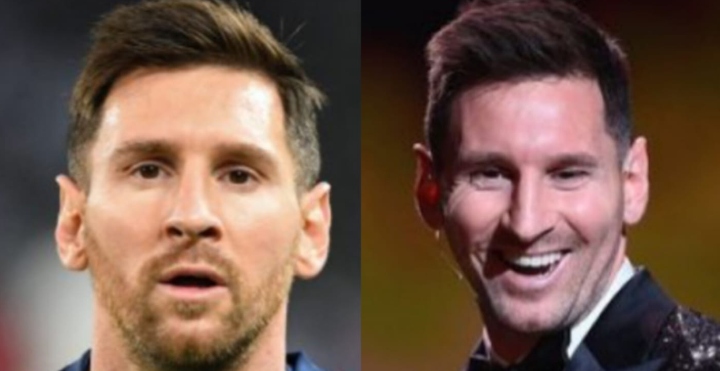
Lionel Messi began his recent interview by returning to the start of his story, long before elite academies or global recognition.
He spoke about Rosario, the city where his football ambitions were once modest and close to home.
“I always say that my childhood dream was to play for Newell’s first team,” he said.
“At that moment, that was everything.”
The scale of what followed, he suggested, was never anticipated.
“Then my life changed completely,” Messi added.
“I lived things much bigger than anything I could have dreamed of.”
That shift came early, when he left Argentina as a child to join Barcelona’s youth system, a move that reshaped both his career and personal life.
Success and scrutiny
At Barcelona, Messi’s rise was rapid and sustained. Titles and individual honours accumulated, establishing him as a central figure in European football. Internationally, however, success proved more elusive for much of his career.
Messi recalled the criticism directed at him during Argentina’s long wait for a major trophy.
“They insulted me; things went badly for me,” he said.
“It was very hard.” The effect, he explained, extended beyond the pitch.
“The ones who suffered the most were my family.”
Rather than discussing pressure in professional terms, Messi framed the period through its impact on those around him, particularly during repeated tournament disappointments.
Family as a constant
Throughout the interview, Messi returned frequently to the role of family in his life. He described their presence as consistent during both success and criticism.
“For me, family is everything,” he said.
“They were always by my side.”
That emphasis, he suggested, influenced his decisions and priorities as his career progressed, including his preference for stability and privacy away from football.
READ ALSO: Who are the Top 10 Most Handsome Football Players?

Mental health and solitude
Messi also addressed his mental health directly, confirming that he had sought professional support earlier in his career.
“I don’t do therapy now,” he said. “At the time I did, in Barcelona.”
He explained that his instinct is to internalise problems rather than discuss them openly.
“I’m eating a lot of things myself, keeping problems to myself.”
Away from football, Messi said he values moments of quiet.
“I really like being alone,” he said.
“When the kids are running around the house, there’s a lot of noise.”
He described solitude not as withdrawal but as a way to reset.
A private relationship
Messi spoke briefly about his relationship with Antonela Roccuzzo, with whom he grew up in Rosario. Their connection, he said, developed gradually over time.
“We knew each other since we were kids,” he said.
“We were friends.”
They later reconnected while living in different countries, maintaining contact through messages before building a family together. Messi did not elaborate further, keeping the discussion factual and restrained.

Leadership without Noise
When asked about leadership, Messi distanced himself from vocal or demonstrative styles.
“I never liked shouting or talking too much,” he said.
Instead, he described leading through consistency and example. He also spoke about Argentina coach Lionel Scaloni, highlighting his approach to managing the squad.
“He’s very close to the group,” Messi said.
“He treats players as people first.”
The relationship, he suggested, helped create a sense of trust within the team.
World Cups
Messi described the World Cup as football’s most unforgiving competition.
“It’s very difficult to win a World Cup,” he said.
“Teams can complicate things – you hit the post and you’re out.”
Argentina’s victory in 2022, he indicated, was shaped by narrow moments rather than inevitability. The tournament brought an end to years of debate surrounding his international career.
Life after football
Looking ahead, Messi said he does not plan to move into coaching or media work after retirement.
“I don’t see myself as a coach or a pundit,” he said.
Instead, he outlined a longer-term ambition.
“I’d like to have my own football club,” he said.
“Start from the bottom and give opportunities to young players.”
Relentless self-assessment
Despite his achievements, Messi said he remains highly self-critical.
“I’ve had many bad matches,” he said.
“And I’ve said everything to myself internally.”
The interview, viewed in its entirety, provided an account that prioritised experience over reputation.
Messi consistently anchored his reflections in themes of family, responsibility, and restraint, rather than in the pursuit of public acclaim.
PAY ATTENTION: Reach us at info@gotta.news.