Blogs & Opinion
Kipchumba Murkomen: The Making of Ruto’s Most Combative Lieutenant

IG Douglas Kanja barely moved. The Inspector General of Police stood ramrod straight, hands clasped before him.
His expression betrayed little as Interior Cabinet Secretary Kipchumba Murkomen turned from briefing the nation on the second anniversary of the June 25 Gen Z anniversary protests to launching into a political broadside against former Deputy President Rigathi Gachagua.
Murkomen’s voice sharpened.
“He forgets there is an Inspector General of Police, Douglas Kanja comes from his village,” he said.
“He only speaks about the Deputy Inspector General. He is someone wired tribally.”
For a fleeting moment, the country’s top police officer found himself pulled into a bitter duel between two politicians.

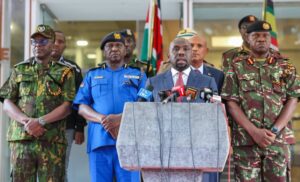
Kipchumba Murkomen during a presser on June 25, 2026. Photo/courtesy
Kanja remained impassive, staring ahead as Murkomen defended Deputy Inspector General Eliud Lagat and accused Gachagua of ethnic profiling.
Around them stood top cops, intelligence officers, and senior civil servants.
Lawyer Cum Political Combatant
Yet what was billed as a national security briefing had suddenly become something else: a vivid demonstration of Murkomen’s evolution into perhaps the William Ruto administration’s most unapologetic political combatant.
It was a remarkable journey for a man many Kenyans first encountered not as a politician but as a thoughtful constitutional lawyer on television.
Long before Parliament, before Cabinet and before becoming one of President William Ruto’s closest political defenders, Onesimus Kipchumba Murkomen was a familiar face on local TV stations.
Calm, articulate, and measured, he dissected constitutional questions with the composure of an academic rather than the fire of a partisan warrior.
His arguments were rooted in law, not slogans. Even those who disagreed with him often conceded he made his case with intellectual discipline.
Then politics happened.
Elected senator for Elgeyo Marakwet in 2013 at just 34, Murkomen rose with astonishing speed.
He became Senate Deputy Majority Leader and later Majority Leader; survived the bruising fallout between Uhuru Kenyatta and William Ruto; lost his leadership position during Jubilee’s civil war; remained fiercely loyal to Ruto; and won re-election in 2017 and again in 2022 before resigning to join the Cabinet.
His portfolio shifted from Roads to Sports and finally to the Interior Ministry, the nerve centre of state power.
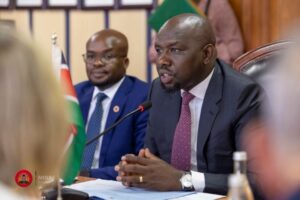

Each promotion appeared to coincide with another transformation.
The television analyst gradually gave way to the political enforcer.
As Interior Cabinet Secretary, Murkomen has become the administration’s principal shield whenever security agencies come under intense public scrutiny.
Whether responding to allegations surrounding abductions, police conduct during demonstrations, a growing culture of political goonism, or criticism from opposition leaders, he rarely yields rhetorical ground.
His language has grown sharper, more personal, and more confrontational, reflecting a government increasingly under pressure from an emboldened, digitally organised generation of young Kenyans.
Yet it is not only his words that dominate public conversation.
Pungent Ostentation
Murkomen has become one of the country’s most visible symbols of political opulence.
Few cabinet secretaries have publicly discussed their wardrobe with such candour.
In television interviews, he cheerfully itemised a watch worth nearly KSh 900,000, shoes costing tens of thousands of shillings, luxury belts, designer ties, and tailored suits.
Rather than retreat from criticism, he defended his taste, arguing that his wealth was lawfully accumulated through legal practice, farming, real estate, and long-term investments.
He insisted that success should not become a source of shame.
His critics saw something entirely different.
To many young Kenyans confronting unemployment, stagnant wages and soaring living costs, those displays landed awkwardly.
They came against the backdrop of protests driven largely by graduates unable to find work, families squeezed by taxes, and a generation questioning whether political leaders inhabit the same economic reality as ordinary citizens.
On social media, Murkomen’s watches became more than accessories. They became metaphors.
Each luxury item was interpreted, fairly or unfairly, as evidence of a widening psychological distance between the governing elite and the governed.
That perception matters in politics.
Leadership is not judged solely by legality. It is also judged by symbolism.
History offers countless examples of leaders who legally acquired wealth yet found themselves politically damaged because public mood had shifted.
In periods of economic hardship, displays of prosperity often cease to be private choices and become public statements.
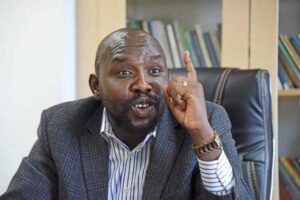
Whether Murkomen intended it or not, many Kenyans interpreted those statements through the prism of their own frustrations.
To his supporters, however, the criticism reveals a troubling tendency to criminalise success.
They argue Murkomen has every right to enjoy the fruits of decades spent as a lawyer, legislator, and investor.
They see confidence where critics see arrogance, consistency where opponents see provocation.
They point to his academic pedigree, his legal training in Kenya, South Africa, and the United States, and his rise from rural Elgeyo Marakwet as evidence of ambition rewarded rather than privilege inherited.
The contrasting readings speak to something larger than one politician.
They reveal Kenya’s deepening political divide.
The Gen Z Protests
Ruto’s administration governs during an era unlike any before it. Traditional ethnic mobilisation increasingly competes with issue-based, youth-driven politics amplified through smartphones rather than party structures.
The June 2024 Gen Z protests fundamentally altered the political landscape, replacing conventional opposition rallies with decentralised digital activism.
In such an environment, governments often depend on figures willing to absorb political fire, dominate media cycles, and aggressively defend state decisions.
Murkomen has increasingly filled that role. He is not merely administering security.
He is communicating power.
That helps explain why his speeches frequently blur the boundary between administrative briefings and political argument.
To supporters, he projects resolve during moments of national tension.

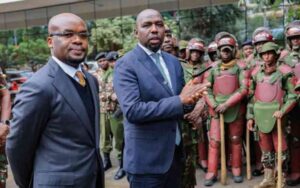
Interior CS Kipchumba Murkomen together with Interior PS Raymond Omollo. Photo/courtesy
To critics, the same performances risk politicising institutions expected to remain above partisan contestation.
His political journey therefore mirrors Kenya’s own transformation.
READ ALSO: The Politician Who Wouldn’t Choose: Inside Ndindi Nyoro’s High-Stakes Gamble With Silence
The composed constitutional commentator who once analysed politics from a studio chair now stands behind government podiums with top cops at his side, defending one of the country’s most scrutinised ministries.
The lawyer who once explained constitutional ideals now finds himself defending the coercive instruments of the state.
Support the journalism you love. Become a Gotta Member.
Every Gotta Membership helps fund fearless reporting, in-depth analysis, and the stories that matter most. Purchase anytime, as often as you wish, and help keep independent journalism thriving.
Join Gotta Membership today. Click HERE to check out securely with Paystack.